
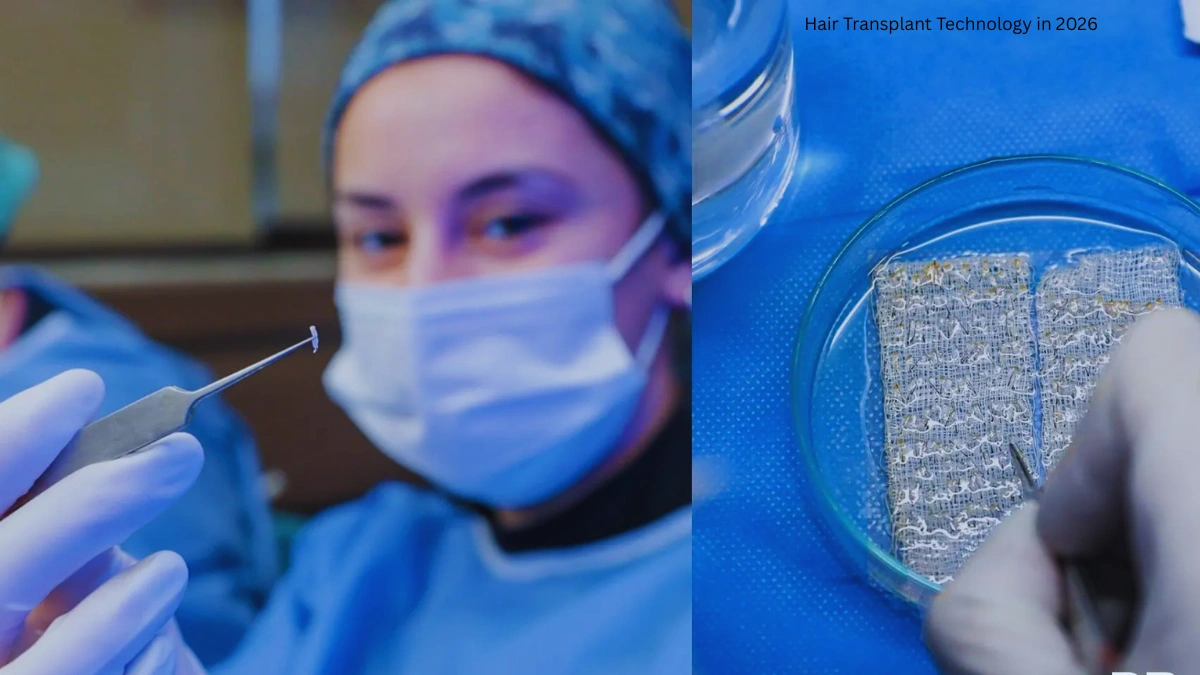
Hair Transplant Technology in 2026: Hair loss can affect confidence, appearance, and overall self-esteem—but the good news is that hair transplant technology in 2026 has reached a whole new level. Today, procedures are no longer just about regrowing hair; they are focused on delivering natural-looking results, faster recovery, and long-term success.
With innovations like AI-powered robotic FUE, Direct Hair Transplant (DHT), and no-shave techniques, patients now experience safer, more precise, and minimally invasive treatments.
At Dr. Hanan Dermatology Speciality Clinic, advanced dermatology expertise combined with modern technology ensures patients receive personalized and effective hair restoration solutions.
For more information and to book your appointment, visit our clinic or call us at the clinic’s contact details.

Hair Transplant Technology 2026
| Feature | Details |
|---|---|
| Technology | AI + Robotic FUE |
| Techniques | DHT, DHI, No-Shave FUE |
| Recovery Time | 3–7 Days |
| Success Rate | 90–95% |
| Suitable For | Men & Women |
What is Hair Transplant Technology in 2026?
Hair transplant technology in 2026 represents the latest evolution of hair restoration, moving beyond traditional methods like FUT (strip method) to more refined and precise approaches such as FUE and DHT.
The focus today is on:
- Natural hairline design
- High graft survival rate
- Minimal discomfort and downtime
Modern techniques ensure that transplanted hair blends seamlessly with existing hair, making results almost indistinguishable from natural growth.
Latest Hair Transplant Technologies in 2026
1. AI-Powered Robotic FUE
Artificial intelligence has revolutionized hair transplant procedures. Robotic systems assist in identifying the best hair follicles and extracting them with unmatched precision.
Key Benefits:
- Accurate graft selection
- Reduced human error
- Faster procedure time
- Consistent results
This technology significantly improves efficiency and success rates, especially in large graft sessions.
2. Direct Hair Transplant (DHT / DHI)
Direct Hair Transplant uses advanced tools like Choi implanter pens to implant hair follicles immediately after extraction.
Advantages:
- Higher graft survival rate
- Precise control over angle and depth
- Ideal for natural hairline creation
This method is widely preferred for patients who want dense and natural-looking results.
3. No-Shave / Unshaven FUE
One of the most in-demand trends in 2026 is the no-shave hair transplant technique.
Why patients prefer it:
- No need to shave the head
- Discreet procedure with minimal visible signs
- Faster return to daily activities
It is especially beneficial for:
- Working professionals
- Women
- Individuals seeking subtle hairline correction
4. Regenerative Medicine Integration
Hair transplant procedures are now enhanced with regenerative treatments such as:
- PRP (Platelet-Rich Plasma)
- Stem Cell Therapy
- Exosome Therapy
Benefits include:
- Faster healing
- Improved hair thickness
- Stronger follicle growthHair Growth Surgery Cost: A Complete Guide
This combination approach ensures better overall hair quality.
5. Advanced Graft Storage Solutions
New graft preservation technologies keep hair follicles healthy for longer periods outside the body.
Impact:
- Increased graft survival rate (up to 95%)
- Improved density and final results
- Reduced follicle damage
Key Trends in Hair Transplant 2026
- Naturalness over density: Focus on realistic hair growth patterns
- Minimal trauma techniques: Less invasive procedures
- Faster recovery: Resume normal life quickly
- Immediate visual results: Techniques like Long Hair FUE
Benefits of Modern Hair Transplant Techniques
- Natural and permanent results
- High success rate
- Minimal pain and scarring
- Quick recovery time
- Suitable for both men and women
Hair Transplant Cost in Chennai (2026)
| Procedure | Price Range |
|---|---|
| FUE | ₹40,000 – ₹80,000 |
| DHT | ₹80,000 – ₹1,50,000 |
| Robotic FUE | ₹1,50,000 – ₹3,00,000 |
Note: Cost may vary depending on graft count and individual requirements.
Why Choose Dr. Hanan Dermatology Speciality Clinic?
Choosing the right clinic is crucial for successful hair restoration.
Expert Leadership
- Dr. Hanan Basith MD (DVL), FFAM
- Graduate of Madras Medical College
- Specialist in Clinical Dermatology & Aesthetics
Professional Associations
- Indian Association of Dermatologists (IADVL)
- Association of Cutaneous Surgeons of India (ACSI)
- Association of Hair Restoration Surgeons of India (AHRS)
Clinic Strengths
- Advanced hair transplant technologies
- Experienced dermatology team
- Personalized treatment plans
- High patient satisfaction
Our Specialized Hair & Skin Services
- Hair Transplant
- Laser Hair Reduction
- Acne Scar Treatment
- Non-Surgical Face Lifting
- Glutathione Treatment
Who is the Right Candidate for Hair Transplant?
You may be a suitable candidate if you have:
- Hair thinning or bald patches
- Receding hairline
- Pattern baldness
- Hair loss due to medical conditions
Both men and women can benefit from modern techniques.
Step-by-Step Hair Transplant Process
- Consultation with dermatologist
- Hair and scalp analysis
- Graft extraction (FUE/DHT)
- Implantation
- Recovery and follow-up care
Do’s and Don’ts After Hair Transplant
| Do’s | Don’ts |
|---|---|
| Follow medical advice | Touch transplanted area |
| Use prescribed products | Expose scalp to sun |
| Attend follow-ups | Skip medications |
FAQs
What is the latest hair transplant technology in 2026?
In 2026, the latest technologies include AI-powered robotic FUE, Direct Hair Transplant (DHT/DHI), and no-shave FUE. These methods focus on natural results, higher graft survival, and faster recovery.
Is AI-powered hair transplant safe and effective?
Yes, AI-assisted hair transplant procedures are safe when performed by experienced dermatologists. They improve precision, reduce human error, and increase the success rate of graft extraction and implantation.
What is the success rate of hair transplant in 2026?
Modern hair transplant techniques offer a 90–95% graft survival rate, depending on the method used and the expertise of the clinic.
What is a no-shave hair transplant?
No-shave (unshaven) FUE is a technique where hair is transplanted without shaving the donor or recipient area. It is ideal for professionals and women who prefer a discreet procedure.
How long does it take to recover after a hair transplant?
Most patients recover within 3 to 7 days, while full hair growth results can be seen within 6 to 12 months.
Is hair transplant painful?
Hair transplant procedures are minimally invasive and performed under local anesthesia, so pain is very minimal. Mild discomfort may be experienced after the procedure.
Who is the right candidate for a hair transplant?
Anyone experiencing hair thinning, bald patches, or a receding hairline can be a candidate. A consultation at Dr. Hanan Dermatology Speciality Clinic can help determine eligibility.
How much does a hair transplant cost in Chennai in 2026?
The cost typically ranges from ₹40,000 to ₹3,00,000, depending on the technique (FUE, DHT, robotic) and the number of grafts required.
Are hair transplant results permanent?
Yes, transplanted hair is usually permanent because the follicles are taken from areas resistant to hair loss. Proper care ensures long-lasting results.
Can women undergo hair transplant in 2026?
Yes, modern techniques like no-shave FUE make hair transplants suitable and effective for women as well.
What is the difference between FUE and DHT?
FUE involves extracting follicles and then implanting them, while DHT (Direct Hair Transplant) implants follicles immediately using specialized tools, improving survival rates and precision.
How soon can I return to work after a hair transplant?
Most patients can return to work within 2–5 days, especially with no-shave techniques that leave minimal visible signs.