Chin Augmentation in Chennai: Procedure, Benefits, Cost, Recovery & Results
Chin Augmentation in Chennai | Chin Fillers & Jawline Enhancement | Dr. Hanan Clinic
Chin Augmentation in Chennai . Get expert, dermatologist-led care at Dr. Hanan Dermatology Speciality Clinic.
Chin Augmentation in Chennai: A well-defined chin plays a vital role in facial harmony and overall appearance. If you have a weak, recessed, or poorly defined chin, chin augmentation can help create a more balanced and attractive facial profile. At Dr. Hanan Dermatology Speciality Clinic, Chennai, we offer advanced chin enhancement treatments tailored to your unique facial features and aesthetic goals.
Led by Dr. Hanan Basith MD (DVL), FFAM, a renowned dermatologist and aesthetic medicine specialist, our clinic provides safe and effective non-surgical facial contouring procedures using the latest techniques and technology.
What Is Chin Augmentation?
Chin augmentation, also known as mentoplasty or genioplasty, is a cosmetic procedure designed to improve the size, shape, and projection of the chin. The treatment enhances facial proportions, improves jawline definition, and creates a more balanced profile.
Depending on the patient’s requirements, chin augmentation can be performed using dermal fillers, implants, or surgical repositioning of the chin bone.
Types of Chin Augmentation Procedures
Non-Surgical Chin Augmentation with Dermal Fillers
Non-surgical chin augmentation is one of the most popular facial contouring treatments today. It involves the use of hyaluronic acid-based fillers to add volume and improve chin projection.
Benefits
- Immediate results
- Minimal downtime
- No surgery or scars
- Natural-looking enhancement
- Quick treatment session
Results typically last between 12 and 24 months depending on the type of filler used and individual metabolism.
Chin Implant Surgery
Chin implants are designed to permanently enhance chin projection. During the procedure, a customized implant is placed over the chin bone through a small incision.
Benefits
- Long-lasting results
- Improved facial balance
- Enhanced jawline definition
- Permanent correction of a weak chin
Sliding Genioplasty
Sliding genioplasty is a surgical procedure where the lower jaw bone is repositioned to improve chin prominence.
Advantages
- Uses the patient’s natural bone
- Permanent results
- Ideal for severe chin retrusion
- Improved facial symmetry
Who Is a Good Candidate for Chin Augmentation?
You may be an ideal candidate if you:
- Have a weak or receding chin
- Desire a stronger jawline
- Want better facial balance
- Are in good general health
- Have realistic expectations about treatment outcomes
A detailed consultation at Dr. Hanan Dermatology Speciality Clinic helps determine the most suitable treatment option based on your facial anatomy and aesthetic goals.
Benefits of Chin Augmentation
Enhanced Facial Harmony
A proportionate chin contributes significantly to facial attractiveness and balance.
Improved Jawline Definition
A stronger chin creates a more sculpted and youthful jawline.
Better Side Profile
Chin augmentation improves profile appearance by balancing the relationship between the nose, lips, and chin.
Increased Confidence
Many patients experience improved self-esteem after achieving a more defined facial structure.
Long-Lasting Results
Depending on the chosen treatment, results can last for years or even permanently.
Chin Augmentation Procedure: Step-by-Step
Initial Consultation
Your journey begins with a detailed facial assessment and discussion of your aesthetic goals.
Customized Treatment Planning
A personalized treatment plan is developed based on facial proportions, chin projection, and desired outcomes.
Treatment Procedure
For filler-based chin augmentation:
- The treatment area is cleansed.
- A numbing cream may be applied.
- Dermal fillers are strategically injected.
- The chin is sculpted for optimal contour and projection.
Post-Treatment Care
Patients receive detailed aftercare instructions to ensure smooth recovery and optimal results.
Chin Augmentation Before and After Results
Results from dermal fillers are visible immediately after treatment, while final results become more refined once minor swelling subsides.
Patients commonly notice:
- Better chin projection
- Enhanced facial balance
- Sharper jawline contour
- More attractive profile appearance
Recovery After Chin Augmentation
First 24–48 Hours
- Mild swelling
- Minor redness
- Temporary tenderness
First Week
Most patients return to normal activities within 24–48 hours after non-surgical treatment.
Long-Term Results
Results continue to settle naturally over the following weeks, creating a balanced and aesthetically pleasing appearance.
Risks and Potential Complications
When performed by experienced professionals, chin augmentation is generally safe. Potential side effects may include:
- Temporary swelling
- Mild bruising
- Tenderness at injection sites
- Rare risk of infection
- Temporary asymmetry
Choosing a qualified aesthetic specialist significantly minimizes risks.
Chin Augmentation Cost in Chennai
The cost of chin augmentation depends on several factors, including:
- Type of procedure
- Amount of filler required
- Treatment complexity
- Practitioner expertise
Estimated Cost Range
| Treatment Type | Cost Range |
|---|---|
| Chin Fillers | ₹20,000 – ₹60,000 |
| Chin Implant Surgery | ₹65,000 – ₹1,20,000 |
| Sliding Genioplasty | ₹90,000 – ₹1,70,000 |
A personalized consultation provides an accurate treatment estimate.
Chin Augmentation vs Chin Fillers
| Feature | Surgical Chin Augmentation | Chin Fillers |
| Procedure | Surgical | Non-Surgical |
| Downtime | Moderate | Minimal |
| Results | Permanent | Temporary |
| Recovery | Several Weeks | 1–2 Days |
| Cost | Higher | More Affordable |
Chin Augmentation Combined with Other Cosmetic Procedures
For comprehensive facial enhancement, chin augmentation is often combined with:
- Non-Surgical Face Lifting
- Jawline Contouring
- Lip Enhancement
- Skin Tightening Treatments
- Facial Rejuvenation Procedures
At Dr. Hanan Dermatology Speciality Clinic, customized treatment plans help achieve natural-looking facial harmony.
Why Choose Dr. Hanan Dermatology Speciality Clinic for Chin Augmentation in Chennai?
Expert-Led Care
Dr. Hanan Basith is a highly qualified dermatologist and aesthetic medicine specialist with advanced training in facial aesthetics.
Personalized Treatment Plans
Every face is unique. We create individualized treatment plans based on your anatomy and aesthetic goals.
Advanced Technology
Our clinic utilizes modern aesthetic techniques and premium-quality products to ensure safe and effective outcomes.
FAQs
1. What is chin augmentation?
Chin augmentation is a cosmetic procedure that enhances the shape, size, and projection of the chin to improve facial balance and jawline definition. It can be performed using dermal fillers, implants, or surgical genioplasty.
2. Who is a good candidate for chin augmentation?
Individuals with a weak, recessed, or underdeveloped chin who want improved facial harmony and a more defined profile are generally good candidates for chin augmentation.
3. What is the difference between chin fillers and chin implant surgery?
Chin fillers are a non-surgical treatment that provides temporary enhancement, while chin implant surgery offers permanent results through the placement of a customized implant.
4. How long does a chin augmentation procedure take?
Non-surgical chin filler treatments typically take 20–45 minutes, while surgical chin augmentation may take 1–2 hours depending on the complexity of the procedure.
5. Is chin augmentation painful?
Most patients experience minimal discomfort. Local anesthesia, numbing cream, or sedation is used to ensure a comfortable treatment experience.
6. How long do chin filler results last?
The results of chin fillers usually last between 12 and 24 months, depending on the type of filler used and individual metabolism.
7. How long does recovery take after chin augmentation?
Recovery varies based on the procedure. Non-surgical treatments generally require little to no downtime, while surgical chin augmentation may require 1–2 weeks of recovery.
8. Will there be swelling after chin augmentation?
Mild swelling, redness, and tenderness are common after treatment and usually subside within a few days to a week.
9. Are the results of chin augmentation permanent?
Surgical procedures such as chin implants and sliding genioplasty offer permanent results. Dermal fillers provide temporary enhancement and require maintenance treatments.
10. Can chin augmentation improve facial symmetry?
Yes. Chin augmentation can help create better facial proportions and improve overall facial symmetry when planned appropriately.
11. Are there any scars after chin augmentation surgery?
Surgical incisions are typically placed inside the mouth or beneath the chin, making scars minimal and often barely noticeable.
12. What are the risks associated with chin augmentation?
Potential risks include swelling, bruising, infection, asymmetry, implant displacement, or temporary numbness. These risks are minimized when the procedure is performed by an experienced specialist.
13. Can chin augmentation be combined with other cosmetic treatments?
Yes. Chin augmentation is often combined with jawline contouring, non-surgical facelifts, lip enhancement, skin tightening treatments, and other facial aesthetic procedures.
14. How much does chin augmentation cost in Chennai?
The cost depends on the technique used. Chin fillers generally range from ₹20,000 to ₹60,000, while surgical procedures can range from ₹65,000 to ₹1,70,000.
15. Why choose Dr. Hanan Dermatology Speciality Clinic for chin augmentation in Chennai?
Dr. Hanan Dermatology Speciality Clinic offers personalized treatment plans, advanced aesthetic techniques, expert care, and a patient-focused approach to help achieve natural-looking and balanced facial enhancement results.
Ready for Permanent Hair Restoration?
Wondering if a hair transplant is permanent? Book a consultation with our specialists and get personalized guidance for long-lasting results!
Table of Contents
Cheek Fillers in Chennai – Restore Volume & Enhance Facial Contours Naturally
Cheek Fillers in Chennai – Restore Volume & Enhance Facial Contours Naturally
Cheek Fillers in Chennai . Get expert, dermatologist-led care at Dr. Hanan Dermatology Speciality Clinic.
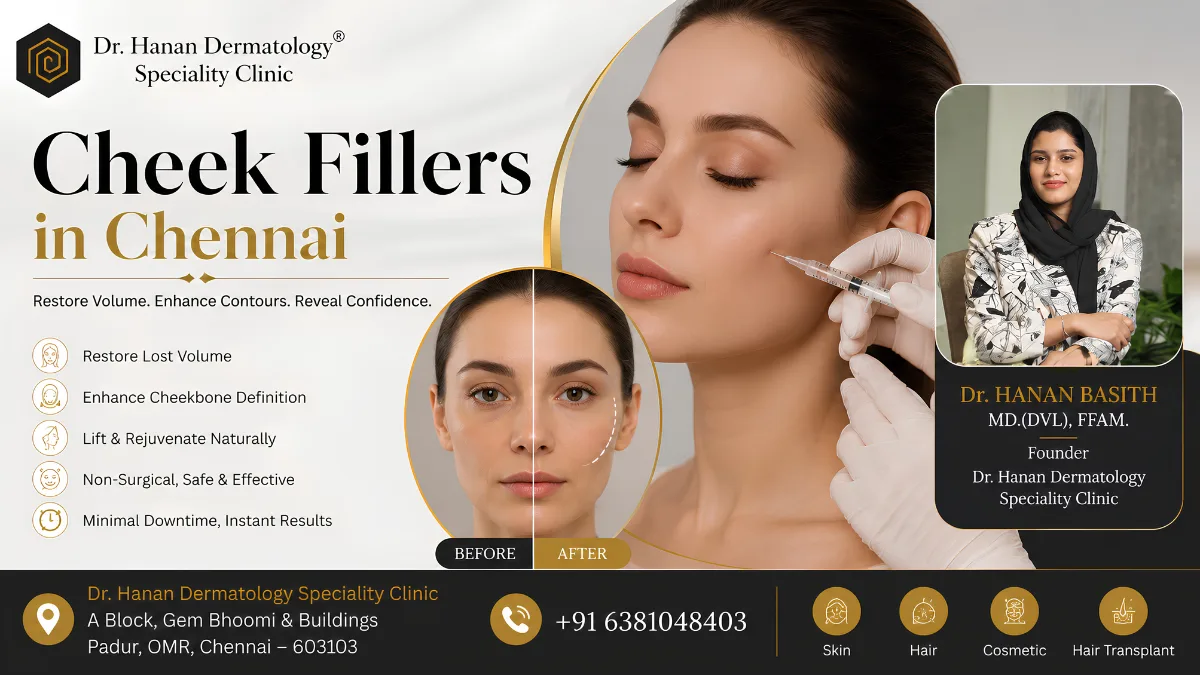
Cheek Fillers in Chennai: As we age, our skin gradually loses collagen, elastin, and facial fat, leading to hollow cheeks, sagging skin, and a tired appearance. If you’re looking for a non-surgical solution to restore youthful facial contours, cheek fillers can be an excellent option. At Dr. Hanan Dermatology Speciality Clinic, we offer advanced cheek filler treatments in Chennai to help you achieve natural-looking volume, enhanced cheekbones, and a refreshed appearance.
Led by Dr. Hanan Basith MD (DVL), FFAM, a renowned dermatologist and aesthetic physician, our clinic specializes in safe and customized facial rejuvenation treatments that enhance your natural beauty without surgery.
What Are Cheek Fillers?
Cheek fillers are injectable dermal fillers designed to restore lost volume in the cheeks, improve facial contours, and create a youthful appearance. These fillers are strategically injected around the cheekbones and mid-face area to provide lift, structure, and definition.
Cheek fillers are commonly used to:
- Restore age-related volume loss
- Enhance cheekbone projection
- Improve facial symmetry
- Reduce the appearance of sagging skin
- Soften nasolabial folds
- Improve under-eye hollows
The procedure is quick, minimally invasive, and delivers immediate results with little to no downtime.
Benefits of Cheek Fillers
Restore Lost Facial Volume
One of the primary reasons patients choose cheek fillers is to replace volume lost due to aging. Fuller cheeks create a healthier and more youthful appearance.
Enhance Cheekbone Definition
Cheek fillers can sculpt and define the cheekbones, creating a balanced and attractive facial profile.
Lift Sagging Skin Naturally
By restoring volume in the mid-face region, fillers can provide a subtle lifting effect that reduces the appearance of sagging skin.
Improve Facial Symmetry
Dermal fillers can correct minor asymmetries and create a more harmonious facial structure.
Reduce Fine Lines and Folds
Adding volume to the cheeks can help soften laugh lines and improve facial proportions.
Immediate Results
Unlike surgical procedures, cheek fillers provide visible improvements immediately after treatment.
Minimal Downtime
Most patients can resume their daily activities shortly after the procedure.
Read more: Face Fillers in Chennai
Who Is an Ideal Candidate for Cheek Fillers?
Cheek fillers may be suitable for individuals who:
- Have hollow or sunken cheeks
- Experience age-related facial volume loss
- Desire enhanced cheekbone definition
- Want facial rejuvenation without surgery
- Are in good general health
A consultation with Dr. Hanan Basith helps determine whether cheek fillers are the right treatment for your aesthetic goals.
Read more: Profhilo Treatment in Chennai
Types of Cheek Fillers Used at Dr. Hanan Dermatology Speciality Clinic
Hyaluronic Acid Fillers
Hyaluronic acid fillers are among the most popular choices for cheek enhancement.
Benefits include:
- Natural-looking results
- Immediate volume restoration
- Reversible treatment option
- Long-lasting outcomes
Common brands include JUVÉDERM and Restylane.
Collagen-Stimulating Fillers
These fillers stimulate the body’s natural collagen production and provide gradual improvements over time.
Benefits include:
- Long-term facial rejuvenation
- Improved skin texture
- Enhanced firmness and elasticity
The choice of filler depends on your facial anatomy, treatment goals, and desired results.
Read more: Wrinkles Treatment in Chennai
Cheek Filler Procedure: What to Expect
Initial Consultation
Your treatment begins with a detailed consultation where Dr. Hanan assesses your facial structure, skin condition, and aesthetic concerns.
Personalized Treatment Plan
A customized treatment strategy is developed to achieve natural and balanced results.
Preparation
The treatment area is cleansed, and a topical numbing cream may be applied for comfort.
Filler Injection
Using advanced injection techniques, the filler is strategically placed into the cheeks to restore volume and improve contours.
Final Assessment
After the procedure, your results are evaluated to ensure optimal symmetry and enhancement.
The entire procedure typically takes 20 to 30 minutes.
How Long Do Cheek Fillers Last?
The longevity of cheek fillers depends on several factors, including the type of filler used, lifestyle habits, and individual metabolism.
Typically:
- Hyaluronic acid fillers last between 12 and 24 months.
- Collagen-stimulating fillers may last up to 2 years or longer.
Periodic maintenance treatments can help preserve your results.
Recovery and Aftercare
Cheek filler treatment requires minimal recovery time.
Common Temporary Effects
Patients may experience:
- Mild swelling
- Redness
- Tenderness
- Minor bruising
These effects usually resolve within a few days.
Aftercare Tips
- Avoid strenuous exercise for 24 to 48 hours.
- Avoid excessive heat exposure.
- Stay hydrated.
- Follow post-treatment instructions provided by your dermatologist.
Cheek Fillers Before and After Results
Many patients notice immediate improvements in facial volume and contour after treatment.
Expected results include:
- Fuller, youthful cheeks
- Better cheekbone definition
- Improved facial balance
- Reduced appearance of facial folds
- Refreshed and rejuvenated appearance
Results continue to improve as swelling subsides over the following days.
Are Cheek Fillers Safe?
Yes, cheek fillers are considered safe when administered by qualified and experienced medical professionals.
At Dr. Hanan Dermatology Speciality Clinic, patient safety is our highest priority. We use high-quality, clinically approved fillers and follow strict safety protocols to deliver exceptional outcomes.
Potential Side Effects of Cheek Fillers
Common Side Effects
- Temporary swelling
- Mild redness
- Bruising
- Tenderness at the injection site
Rare Complications
Although uncommon, possible complications may include:
- Infection
- Asymmetry
- Filler migration
- Vascular occlusion
Choosing a skilled dermatologist significantly reduces these risks.
Cheek Fillers Cost in Chennai
The cost of cheek fillers in Chennai varies depending on:
- Type of filler used
- Quantity required
- Treatment complexity
- Individual aesthetic goals
During your consultation, Dr. Hanan will provide a personalized treatment plan and cost estimate tailored to your needs.
Why Choose Dr. Hanan Dermatology Speciality Clinic for Cheek Fillers in Chennai?
Expertise of Dr. Hanan Basith MD (DVL), FFAM
Dr. Hanan Basith is a highly respected dermatologist and aesthetic physician with extensive experience in facial aesthetics and cosmetic dermatology.
Advanced Aesthetic Techniques
We utilize the latest filler technologies and advanced injection methods to ensure natural-looking results.
Personalized Treatment Plans
Every patient receives a customized treatment approach designed to complement their unique facial features.
Safe and Hygienic Environment
Our clinic follows stringent safety standards and uses premium-quality products.
Trusted Dermatology Clinic in Chennai
Patients trust Dr. Hanan Dermatology Speciality Clinic for effective skin, hair, and cosmetic treatments delivered with professionalism and care.
FAQs
1. What are cheek fillers?
Cheek fillers are injectable dermal fillers used to restore lost facial volume, enhance cheekbone definition, and improve facial contours. They provide a non-surgical solution for achieving a youthful and refreshed appearance.
2. How long do cheek fillers last?
The results of cheek fillers typically last between 12 and 24 months, depending on the type of filler used, your metabolism, lifestyle, and the treatment area.
3. Are cheek fillers safe?
Yes, cheek fillers are generally safe when administered by a qualified dermatologist using FDA-approved fillers. At Dr. Hanan Dermatology Speciality Clinic, treatments are performed following strict safety protocols.
4. Is the cheek filler procedure painful?
Most patients experience minimal discomfort during the procedure. Many fillers contain a numbing agent, and topical anesthetic cream may also be applied before treatment.
5. How long does the cheek filler procedure take?
The procedure usually takes about 20 to 30 minutes, making it a convenient lunchtime cosmetic treatment.
6. When will I see results after cheek fillers?
Results are visible immediately after the treatment. However, the final outcome can be appreciated once any minor swelling subsides within a few days.
7. Is there any downtime after cheek filler treatment?
There is minimal downtime. Patients can usually return to their daily activities immediately, although mild swelling or bruising may occur temporarily.
8. Who is a good candidate for cheek fillers?
Individuals with hollow cheeks, age-related volume loss, facial asymmetry, or those seeking enhanced cheekbone definition are generally good candidates for cheek filler treatment.
9. Can cheek fillers lift sagging skin?
Yes, strategically placed cheek fillers can create a subtle lifting effect, improving facial contours and reducing the appearance of mild sagging.
10. What are the possible side effects of cheek fillers?
Common side effects include mild swelling, redness, tenderness, and bruising at the injection site. These effects are usually temporary and resolve within a few days.
11. How much do cheek fillers cost in Chennai?
The cost varies depending on the type of filler used, the number of syringes required, and the individual’s treatment goals. A personalized cost estimate is provided during the consultation.
12. Why choose Dr. Hanan Dermatology Speciality Clinic for cheek fillers in Chennai?
Dr. Hanan Dermatology Speciality Clinic offers advanced facial aesthetic treatments under the expertise of Dr. Hanan Basith MD (DVL), FFAM. The clinic focuses on personalized treatment plans, natural-looking results, patient safety, and the use of premium-quality dermal fillers.
Ready for Permanent Hair Restoration?
Wondering if a hair transplant is permanent? Book a consultation with our specialists and get personalized guidance for long-lasting results!
Table of Contents
Face Fillers in Chennai – Safe, Natural-Looking Dermal Fillers at Dr. Hanan Dermatology Clinic
Face Fillers in Chennai – Safe, Natural-Looking Dermal Fillers at Dr. Hanan Dermatology Clinic
Face Fillers in Chennai . Get expert, dermatologist-led care at Dr. Hanan Dermatology Speciality Clinic.
Facial aging is a natural process that causes the skin to lose volume, elasticity, and youthful contours over time. Fine lines, wrinkles, hollow cheeks, and sagging skin can make you appear older than you feel. Fortunately, modern aesthetic dermatology offers a non-surgical solution through face fillers.
If you are looking for safe and effective face fillers in Chennai, Dr. Hanan Dermatology Speciality Clinic provides advanced dermal filler treatments designed to restore lost volume, smooth wrinkles, and enhance facial features while maintaining a natural appearance.
What Are Face Fillers?
Face fillers, also known as dermal fillers, are injectable gel-like substances used to restore facial volume, improve contours, and reduce visible signs of aging. Most modern fillers are made from hyaluronic acid, a naturally occurring substance in the body that helps retain moisture and keep the skin plump.
Dermal fillers are commonly used to:
- Enhance lips
- Restore cheek volume
- Define jawlines
- Improve chin projection
- Reduce smile lines
- Treat under-eye hollows
- Improve facial symmetry
- Minimize certain acne scars
Unlike surgical procedures, fillers offer immediate results with minimal downtime.
Benefits of Face Fillers
Face fillers have become one of the most sought-after cosmetic treatments because of their numerous benefits.
Immediate Results
Patients notice visible improvements immediately after treatment.
Non-Surgical Procedure
No incisions, stitches, or lengthy recovery periods are required.
Natural Appearance
When administered by an experienced dermatologist, fillers provide subtle and natural-looking enhancement.
Minimal Downtime
Most patients return to their daily routine immediately after treatment.
Long-Lasting Results
Depending on the treatment area and filler type, results may last between 12 and 24 months.
Reversible Treatment
Hyaluronic acid fillers can be dissolved if necessary using an enzyme called hyaluronidase.
Who Is an Ideal Candidate for Face Fillers?
You may be a suitable candidate for dermal fillers if you experience:
- Age-related facial volume loss
- Hollow cheeks
- Thin lips
- Deep smile lines
- Under-eye hollows
- Weak chin or jawline definition
- Mild facial asymmetry
- Acne scars requiring volume correction
A consultation with a qualified dermatologist can help determine the most suitable treatment plan for your concerns.
Face Filler Treatment Procedure at Dr. Hanan Dermatology Clinic
Initial Consultation
Every treatment begins with a detailed facial assessment. Dr. Hanan evaluates facial anatomy, skin quality, and aesthetic goals before recommending treatment.
Customized Treatment Plan
The treatment is tailored to each patient’s facial structure and desired outcome. The type and amount of filler required are carefully determined.
Injection Procedure
A topical numbing cream is applied before treatment to maximize comfort. Using advanced injection techniques, the filler is strategically placed to achieve natural-looking enhancement.
The procedure typically takes between 20 and 45 minutes.
Post-Treatment Care
Patients receive detailed aftercare instructions to optimize results and minimize swelling or bruising.
Types of Face Fillers Available
Hyaluronic Acid Fillers
These are the most commonly used fillers due to their safety profile and natural-looking results.
Volumizing Fillers
Used to restore fullness in the cheeks, temples, and mid-face.
Contouring Fillers
Designed to improve jawline definition, chin projection, and facial balance.
Lip Enhancement Fillers
Specialized fillers used to increase lip volume and improve lip shape.
Face Fillers for Different Facial Areas
Lip Fillers
Lip fillers enhance volume, improve symmetry, and create well-defined lips while preserving a natural look.
Cheek Fillers
Cheek fillers restore youthful fullness and improve facial contours.
Jawline Fillers
Jawline fillers create a sharper and more defined facial profile.
Chin Fillers
Chin fillers improve projection and balance facial proportions.
Under-Eye Fillers
These fillers reduce hollowness and tired-looking eyes.
Smile Line Fillers
Dermal fillers effectively soften nasolabial folds and marionette lines.
Before and After Face Fillers: What Results Can You Expect?
Most patients notice immediate improvement following treatment.
Initially, mild swelling may occur, which typically settles within a few days. Final results become more refined over one to two weeks.
Patients often experience:
- Enhanced facial contours
- Smoother skin appearance
- Improved facial symmetry
- A youthful and refreshed look
How Long Do Face Fillers Last?
The longevity of fillers depends on the treatment area, product used, and individual metabolism.
Treatment Area Average Duration Lips 6–12 Months Under Eyes 12–18 Months Cheeks 12–18 Months Jawline 12–24 Months Chin 12–24 Months
Face Fillers Cost in Chennai
The cost of dermal fillers varies based on several factors:
- Treatment area
- Type of filler used
- Number of syringes required
- Expertise of the treating dermatologist
In Chennai, dermal filler treatments generally range between ₹15,000 and ₹40,000 per syringe.
A personalized consultation is recommended for an accurate treatment estimate.
Are Face Fillers Safe?
Yes. Face fillers are considered safe when administered by trained and experienced dermatologists using approved products.
Common temporary side effects include:
- Mild swelling
- Redness
- Tenderness
- Minor bruising
These effects typically resolve within a few days.
Choosing a qualified medical professional significantly reduces the risk of complications.
Why Choose Dr. Hanan Dermatology Speciality Clinic for Face Fillers in Chennai?
Dr. Hanan Dermatology Speciality Clinic is recognized as one of the trusted destinations for aesthetic dermatology and facial rejuvenation treatments in Chennai.
Expertise of Dr. Hanan Basith MD (DVL), FFAM
Dr. Hanan Basith is a highly qualified dermatologist and aesthetic medicine specialist.
Her credentials include:
- Graduate of Madras Medical College, Chennai
- Fellowship in Facial Aesthetic Medicine (FFAM)
- International Academy of Facial Cosmetic Surgery (IAFCS)
- Indian Society of Facial Plastic and Reconstructive Surgery
- Member of IADVL, ACSI, IASTD, and AHRS
She is widely respected for her expertise in Clinical Dermatology, Dermoscopy, and Aesthetic Medicine.
Advanced Treatment Advantages
- Personalized facial assessment
- Premium quality fillers
- Advanced injection techniques
- Natural-looking outcomes
- Sterile clinical environment
- Comprehensive aftercare support
FAQs
1. What are face fillers?
Face fillers, also known as dermal fillers, are injectable treatments used to restore facial volume, reduce wrinkles, and enhance facial features such as the lips, cheeks, jawline, and chin. Most fillers contain hyaluronic acid, a substance naturally found in the body.
2. How much do face fillers cost in Chennai?
The cost of face fillers in Chennai typically ranges from ₹15,000 to ₹40,000 per syringe. The final price depends on the treatment area, type of filler used, and the amount required to achieve the desired results.
3. Are face fillers safe?
Yes. Face fillers are generally safe when administered by a qualified dermatologist using approved products. At Dr. Hanan Dermatology Speciality Clinic, treatments are performed following strict safety protocols to ensure optimal results.
4. How long do face fillers last?
The results of dermal fillers usually last between 6 and 24 months, depending on the treatment area, filler type, and individual metabolism.
5. Are face filler injections painful?
Most patients experience minimal discomfort during the procedure. A topical numbing cream is applied before treatment, and many fillers contain lidocaine to enhance comfort.
6. What areas can be treated with face fillers?
Face fillers can be used to treat:
- Lips
- Cheeks
- Jawline
- Chin
- Under-eye hollows
- Nasolabial folds (smile lines)
- Marionette lines
- Acne scars
7. How soon will I see results after face fillers?
Results are visible immediately after the treatment. However, the final outcome becomes more noticeable after any minor swelling subsides, usually within a few days.
8. Is there any downtime after face fillers?
Face fillers require little to no downtime. Most patients can resume normal daily activities immediately after the procedure, although strenuous exercise should be avoided for 24–48 hours.
9. Can face fillers be dissolved?
Yes. Hyaluronic acid fillers can be safely dissolved using an enzyme called hyaluronidase if necessary.
10. Who is a good candidate for face fillers?
Face fillers are suitable for adults who want to restore lost facial volume, reduce signs of aging, improve facial contours, or enhance features such as the lips, cheeks, chin, or jawline.
11. What are the side effects of face fillers?
Temporary side effects may include mild swelling, redness, bruising, tenderness, or slight discomfort at the injection site. These effects usually resolve within a few days.
12. Why choose Dr. Hanan Dermatology Speciality Clinic for face fillers in Chennai?
Dr. Hanan Basith MD (DVL), FFAM is a highly experienced dermatologist and aesthetic medicine specialist with advanced training in facial aesthetics. The clinic offers personalized treatment plans, premium-quality fillers, natural-looking results, and comprehensive patient care.
13. How long does a face filler procedure take?
A typical face filler session takes approximately 20 to 45 minutes, depending on the number of areas being treated.
14. Can face fillers make me look unnatural?
When performed by an experienced dermatologist, face fillers enhance your natural features while maintaining facial balance and harmony. The goal is subtle, natural-looking rejuvenation.
Ready for Permanent Hair Restoration?
Wondering if a hair transplant is permanent? Book a consultation with our specialists and get personalized guidance for long-lasting results!
Table of Contents
Profhilo Treatment in Chennai – Advanced Skin Hydration & Anti-Aging Solutions by Dr. Hanan
Profhilo Treatment in Chennai – Advanced Skin Hydration & Anti-Aging Solutions
Aging, environmental stress, sun exposure, and lifestyle factors can gradually reduce the skin’s natural collagen and elastin levels, resulting in fine lines, wrinkles, dullness, and loss of firmness. If you’re looking for a non-surgical solution to restore youthful, glowing skin, Profhilo Treatment in Chennai is one of the most advanced aesthetic treatments available today.
At Dr. Hanan Dermatology Speciality Clinic, we offer personalized Profhilo treatments to improve skin hydration, elasticity, and overall skin quality. This revolutionary injectable treatment helps rejuvenate the skin from within, providing natural-looking results with minimal downtime.
What is Profhilo Treatment?
Profhilo is an innovative injectable skin remodeling treatment that contains a high concentration of pure hyaluronic acid. Unlike traditional dermal fillers that add volume to specific facial areas, Profhilo spreads evenly beneath the skin to stimulate collagen and elastin production while deeply hydrating the tissues.
The treatment works as a bio-remodeling solution, helping improve skin texture, firmness, and radiance without altering facial expressions or contours.
How Does Profhilo Work?
Profhilo uses advanced NAHYCO® technology, which combines high and low molecular weight hyaluronic acid through a unique thermal manufacturing process.
Bio-Remodeling Action
The product spreads smoothly under the skin and stimulates natural tissue regeneration.
Collagen and Elastin Stimulation
Profhilo activates fibroblast cells responsible for producing collagen and elastin, which help maintain youthful skin.
Intense Hydration
The hyaluronic acid attracts and retains moisture, resulting in plumper and healthier-looking skin.
Skin Tightening and Rejuvenation
Over time, patients experience firmer skin, improved elasticity, and a noticeable glow.
Benefits of Profhilo Treatment
Profhilo offers several benefits for patients seeking non-invasive anti-aging solutions.
Deep Skin Hydration
Provides long-lasting hydration from within, making the skin appear healthier and more radiant.
Improved Skin Elasticity
Enhances firmness and reduces mild skin laxity.
Reduction of Fine Lines and Wrinkles
Smoothens the appearance of early signs of aging.
Natural-Looking Results
Improves skin quality without creating an artificial or overfilled appearance.
Enhanced Skin Texture
Promotes smoother and softer skin with improved tone.
Minimal Downtime
Most patients can resume daily activities immediately after treatment.
Book Your Consultation Today!
Get the best hair transplant in Chennai at Dr. Hanan Clinic. Feel confident and proud with our expert care.
Who is an Ideal Candidate for Profhilo?
Profhilo may be suitable for individuals who experience:
- Dull or tired-looking skin
- Fine lines and wrinkles
- Mild skin sagging
- Dehydrated skin
- Loss of firmness
- Uneven skin texture
Both men and women can benefit from this treatment.
Areas That Can Be Treated with Profhilo
Face
Improves hydration, texture, and skin firmness.
Neck
Reduces crepey skin and improves elasticity.
Décolletage
Enhances skin quality in the chest area.
Hands
Restores hydration and youthful appearance.
Arms
Improves skin laxity and texture.
Abdomen
Can help improve mild skin looseness.
Knees and Thighs
Enhances firmness and skin quality in aging areas.
Profhilo Treatment Procedure
Consultation
Our dermatology specialists evaluate your skin concerns and determine whether Profhilo is suitable for you.
Skin Assessment
A comprehensive examination helps create a customized treatment plan.
Injection Session
Profhilo is injected into specific Bio-Aesthetic Points (BAP) that allow optimal diffusion of the product.
Follow-Up Treatment
A second session is generally performed four weeks after the first treatment.
Maintenance
Periodic maintenance sessions help preserve long-term results.
What to Expect During the Procedure?
The treatment typically takes 20 to 30 minutes.
Patients may experience:
- Mild redness
- Temporary swelling
- Minor tenderness
These effects usually resolve quickly.
Profhilo Before and After Results
Many patients notice improvements in skin hydration and glow within a few weeks.
After completing the recommended treatment protocol, benefits may include:
- Firmer skin
- Better elasticity
- Reduced fine lines
- Improved skin texture
- Brighter complexion
- Youthful appearance
Results continue to improve as collagen production increases.
How Many Sessions Are Required?
The standard Profhilo treatment protocol includes:
| Session | Timeline |
|---|---|
| First Session | Initial Treatment |
| Second Session | After 4 Weeks |
| Maintenance Session | Every 6–9 Months |
The exact schedule may vary depending on individual skin concerns.
Profhilo vs Dermal Fillers
| Feature | Profhilo | Dermal Fillers |
| Purpose | Skin Remodeling | Volume Enhancement |
| Hydration | Excellent | Moderate |
| Natural Glow | Yes | Limited |
| Facial Contouring | No | Yes |
| Skin Quality Improvement | Excellent | Moderate |
Profhilo vs Botox
Feature Profhilo Botox Improves Skin Quality Yes Limited Hydration Effect Yes No Reduces Dynamic Wrinkles Mild Excellent Natural Skin Glow Yes No
FAQs
1. What is Profhilo treatment?
Profhilo is an advanced injectable skin rejuvenation treatment that uses highly concentrated hyaluronic acid to improve skin hydration, elasticity, and firmness while stimulating natural collagen and elastin production.
2. How is Profhilo different from dermal fillers?
Unlike dermal fillers that add volume to specific areas, Profhilo spreads beneath the skin to improve overall skin quality, hydration, and texture without changing facial contours.
3. Is Profhilo treatment safe?
Yes. Profhilo is considered a safe and clinically proven treatment when administered by qualified dermatologists. It contains pure hyaluronic acid and is highly biocompatible.
4. Who is a suitable candidate for Profhilo?
Profhilo is ideal for men and women experiencing:
- Fine lines and wrinkles
- Dull or dehydrated skin
- Mild skin laxity
- Loss of skin firmness
- Early signs of aging
5. What areas can be treated with Profhilo?
Profhilo can be used on:
- Face
- Neck
- Décolletage
- Hands
- Arms
- Abdomen
- Knees and thighs
6. How many Profhilo sessions are required?
Most patients require two treatment sessions spaced four weeks apart. Maintenance treatments may be recommended every 6 to 9 months.
7. Is Profhilo treatment painful?
The procedure involves a few small injections and is generally well tolerated. Most patients experience only mild discomfort during treatment.
8. How long does a Profhilo session take?
A typical Profhilo treatment session takes approximately 20 to 30 minutes, making it a convenient lunchtime procedure.
9. When will I see results after Profhilo treatment?
Many patients notice improved skin hydration and radiance within a few weeks. Full results typically become more visible after the second session.
10. How long do Profhilo results last?
Results usually last between 6 and 9 months, depending on individual skin condition, lifestyle, and aging factors.
11. Is there any downtime after Profhilo treatment?
Profhilo requires minimal downtime. Mild redness or swelling at the injection sites may occur but generally resolves within 24 to 48 hours.
12. Can Profhilo help reduce wrinkles?
Yes. Profhilo helps improve skin elasticity and hydration, which can soften fine lines and reduce the appearance of wrinkles.
13. Can Profhilo be combined with other treatments?
Yes. Profhilo can often be combined with treatments such as Botox, dermal fillers, laser treatments, and chemical peels based on your dermatologist’s recommendations.
14. How much does Profhilo treatment cost in Chennai?
The cost varies depending on the treatment area, number of sessions required, and individual skin concerns. A consultation can provide a personalized treatment estimate.
15. Why choose Dr. Hanan Dermatology Speciality Clinic for Profhilo treatment in Chennai?
Dr. Hanan Dermatology Speciality Clinic offers:
- Experienced dermatology specialists
- Advanced aesthetic treatments
- Personalized treatment plans
- Modern technology and techniques
- Comprehensive skin and anti-aging solutions
- Patient-focused care and support
Table of Contents
Best Dermatologist in Chennai | Top Skin Specialist & Celebrity Choice
Best Dermatologist in Chennai | Top Skin Specialist & Celebrity Choice
Dr. Hanan Dermatology Speciality Clinic is a leading skin, hair, laser, and hair transplant clinic in Chennai, offering advanced and affordable treatments for various skin and hair concerns. Our expert team provides personalized care using modern dermatology and cosmetic technologies to help you achieve healthy skin, stronger hair, and natural-looking results.

Best Dermatologist in Chennai: Healthy skin and strong hair play a vital role in enhancing confidence and overall well-being. Whether you are dealing with acne, pigmentation, hair loss, aging concerns, or other skin conditions, consulting the best dermatologist in Chennai can help you achieve healthy, radiant skin through expert care and advanced treatments.
At Dr. Hanan Dermatology Speciality Clinic, we provide comprehensive skin, hair, laser, and cosmetic dermatology services tailored to each patient’s unique needs. Located in Padur, OMR, Chennai, our clinic is dedicated to delivering affordable, safe, and effective dermatological treatments using the latest medical technologies.
Why Dr. Hanan is Considered One of the Best Dermatologists in Chennai
Finding the right skin specialist is essential for achieving long-lasting results. Dr. Hanan Dermatology Speciality Clinic is recognized for its patient-focused approach, advanced treatment methods, and commitment to excellence in dermatology and cosmetology.
Experienced Skin & Hair Specialist
Our team specializes in diagnosing and treating a wide range of skin, hair, and nail disorders. Every patient receives personalized care based on their specific concerns and skin type.
Advanced Dermatology Expertise
From medical dermatology to cosmetic procedures, we offer evidence-based treatments designed to improve both skin health and appearance.
Personalized Treatment Plans
No two patients are alike. Our dermatologists create customized treatment plans to ensure optimal outcomes and patient satisfaction.
Affordable and Effective Care
We believe quality dermatological care should be accessible to everyone. Our clinic provides advanced treatments at affordable prices without compromising on quality.
About Dr. Hanan Dermatology Speciality Clinic
Dr. Hanan Dermatology Speciality Clinic is a leading Skin and Hair care clinic in Chennai that offers comprehensive solutions for skin, hair, and cosmetic concerns.
Our services include:
- Medical Dermatology
- Cosmetic Dermatology
- Hair Treatments
- Hair Transplant Services
- Laser Treatments
- Anti-Aging Solutions
- Skin Rejuvenation Procedures
With modern equipment and experienced specialists, we aim to deliver safe and effective treatments for patients of all ages.
Comprehensive Skin Treatments
Acne and Acne Scar Treatment
Acne can affect teenagers and adults alike, often leaving behind scars and pigmentation. We provide advanced acne management solutions including medications, chemical peels, laser therapy, and scar revision procedures.
Pigmentation and Melasma Treatment
Uneven skin tone, dark spots, and melasma can significantly impact confidence. Our specialists use customized treatment protocols to restore clear and healthy skin.
Skin Allergy and Eczema Management
Persistent itching, redness, and irritation require proper diagnosis and treatment. We help patients manage allergies and chronic skin conditions effectively.
Psoriasis Treatment
Psoriasis is a long-term autoimmune skin condition that requires expert care. Our dermatologists provide personalized treatment strategies to reduce symptoms and improve quality of life.
Skin Infection Treatment
Fungal, bacterial, and viral skin infections are treated using advanced diagnostic methods and evidence-based therapies.
Wart and Skin Tag Removal
Safe and effective removal procedures help improve both appearance and comfort.
Book Your Consultation Today!
Get the best hair transplant in Chennai at Dr. Hanan Clinic. Feel confident and proud with our expert care.
Advanced Hair Treatments
Hair problems can affect self-confidence and overall appearance. At Dr. Hanan Dermatology Speciality Clinic, we offer comprehensive hair restoration solutions.
Hair Loss Treatment
Our dermatologists identify the root cause of hair fall and recommend targeted treatments for effective results.
PRP Hair Therapy
Platelet-Rich Plasma (PRP) therapy uses your body’s natural growth factors to stimulate hair follicles and promote hair growth.
Dandruff and Scalp Treatment
Persistent dandruff and scalp disorders can be effectively managed with expert diagnosis and personalized treatment.
Alopecia Treatment
We offer specialized care for various forms of alopecia and hair thinning conditions.
Hair Transplant Consultation
Patients experiencing advanced hair loss can benefit from professional hair transplant evaluations and treatment planning.
Dandruff and Scalp Treatment
Persistent dandruff and scalp disorders can be effectively managed with expert diagnosis and personalized treatment.
Alopecia Treatment
We offer specialized care for various forms of alopecia and hair thinning conditions.
Hair Transplant Consultation
Patients experiencing advanced hair loss can benefit from professional hair transplant evaluations and treatment planning.
Cosmetic Dermatology Services
Cosmetic dermatology focuses on enhancing skin appearance and addressing aesthetic concerns.
Anti-Aging Treatments
Our anti-aging solutions help reduce wrinkles, fine lines, and loss of skin elasticity.
Botox and Dermal Fillers
Non-surgical cosmetic procedures can restore youthful facial contours and reduce visible signs of aging.
Chemical Peels
Chemical peels improve skin texture, reduce pigmentation, and treat acne scars effectively.
Skin Brightening Treatments
Customized skin brightening procedures help achieve a clearer, more radiant complexion.
Laser Skin Rejuvenation
Advanced laser technologies improve skin tone, texture, and overall appearance.
Microneedling and RF Microneedling
These treatments stimulate collagen production and help improve acne scars,
Laser Treatments at Dr. Hanan Clinic
Laser technology has transformed modern dermatology by offering safe and precise treatment options.
Our laser services include:
- Laser Hair Removal
- Pigmentation Removal
- Scar Reduction
- Skin Tightening
- Skin Rejuvenation
- Acne Scar Treatment
These minimally invasive procedures deliver excellent results with minimal downtime.
Benefits of Choosing Dr. Hanan Dermatology Speciality Clinic
Patients choose our clinic because of:
- Experienced dermatology specialists
- Modern treatment technologies
- Personalized patient care
- Affordable treatment plans
- Comprehensive skin and hair solutions
- Safe and evidence-based procedures
- High patient satisfaction
When Should You Visit a Dermatologist?
You should consult a dermatologist if you experience:
- Persistent acne
- Excessive hair fall
- Chronic itching
- Skin rashes
- Pigmentation issues
- Unusual moles or growths
- Dandruff and scalp disorders
- Signs of premature aging
Early diagnosis often leads to faster treatment and better outcomes.
Why Chennai Patients Trust Dr. Hanan Clinic
Patients across Chennai trust Dr. Hanan Dermatology Speciality Clinic because of our commitment to quality care and proven treatment results.
We focus on:
- Accurate diagnosis
- Personalized treatment plans
- Patient education
- Modern dermatology practices
- Long-term skin and hair health
Our goal is to help every patient achieve healthier skin, stronger hair, and renewed confidence.
Why Celebrities and Professionals Prefer Advanced Dermatology Care
Reason Benefit Personalized Treatments Individual skin concerns-ku customized solutions Privacy & Confidentiality Patient information secure-a handle pannapadum Advanced Technology Latest laser and cosmetic procedures Faster Recovery Minimal downtime treatments Natural-Looking Results Safe and effective outcomes
FAQs
1. Who is the best dermatologist in Chennai?
Dr. Hanan Dermatology Speciality Clinic is recognized for providing advanced skin, hair, laser, and cosmetic dermatology treatments with personalized care and affordable pricing in Chennai.
2. What skin conditions are treated at Dr. Hanan Dermatology Speciality Clinic?
The clinic treats acne, acne scars, pigmentation, melasma, eczema, psoriasis, skin allergies, fungal infections, warts, skin tags, and various other skin concerns.
3. When should I consult a dermatologist?
You should visit a dermatologist if you experience persistent acne, excessive hair fall, unexplained rashes, chronic itching, pigmentation issues, scalp problems, or signs of premature aging.
4. Does Dr. Hanan Clinic provide hair loss treatment?
Yes. The clinic offers comprehensive hair loss solutions, including PRP therapy, scalp treatments, medications, alopecia management, and hair transplant consultations.
5. Is PRP treatment effective for hair growth?
PRP (Platelet-Rich Plasma) therapy can help stimulate hair follicles, improve hair density, and support natural hair growth in suitable candidates.
6. Does the clinic offer laser treatments?
Yes. Advanced laser treatments are available for laser hair removal, pigmentation reduction, acne scar treatment, skin rejuvenation, and skin tightening.
7. What cosmetic dermatology treatments are available?
The clinic offers Botox, dermal fillers, chemical peels, skin brightening treatments, microneedling, anti-aging treatments, and laser skin rejuvenation procedures.
8. How much does a dermatologist consultation cost in Chennai?
Consultation costs vary depending on the treatment plan and individual concerns. Contact the clinic directly for the latest consultation charges.
9. Is laser hair removal safe?
Laser hair removal is generally considered safe when performed by qualified dermatology professionals using advanced technology and proper protocols.
10. Can dermatologists help with acne scars?
Yes. Dermatologists offer treatments such as chemical peels, microneedling, laser therapy, and scar revision procedures to improve the appearance of acne scars.
11. Why choose Dr. Hanan Dermatology Speciality Clinic?
Patients choose the clinic for its experienced specialists, personalized treatment plans, advanced dermatology technology, affordable pricing, and comprehensive skin and hair care services.
12. How can I book an appointment with Dr. Hanan Dermatology Speciality Clinic?
You can schedule an appointment by calling +91 6381048403 or visiting:
Dr. Hanan Dermatology Speciality Clinic
A Block, Gem Bhoomi & Buildings
Padur, OMR, Chennai – 603103
13. What makes Dr. Hanan one of the top skin specialists in Chennai?
Dr. Hanan Dermatology Speciality Clinic combines expert dermatological care, modern cosmetic treatments, advanced laser technology, and patient-focused service to deliver effective results.
14. Are treatments suitable for both men and women?
Yes. The clinic provides customized skin, hair, and cosmetic treatments for men, women, and teenagers based on their specific concerns.
15. Can I get treatment for pigmentation and dark spots?
Yes. The clinic offers specialized treatments for pigmentation, melasma, sun damage, and dark spots using medical-grade skincare, chemical peels, and laser procedures.
Table of Contents
Thread Lift Treatment: Lift and Rejuvenate Your Skin Without Surgery
Thread Lift Treatment
Thread Lift Treatment – Advanced Under Eye Solutions by Dr. Hanan
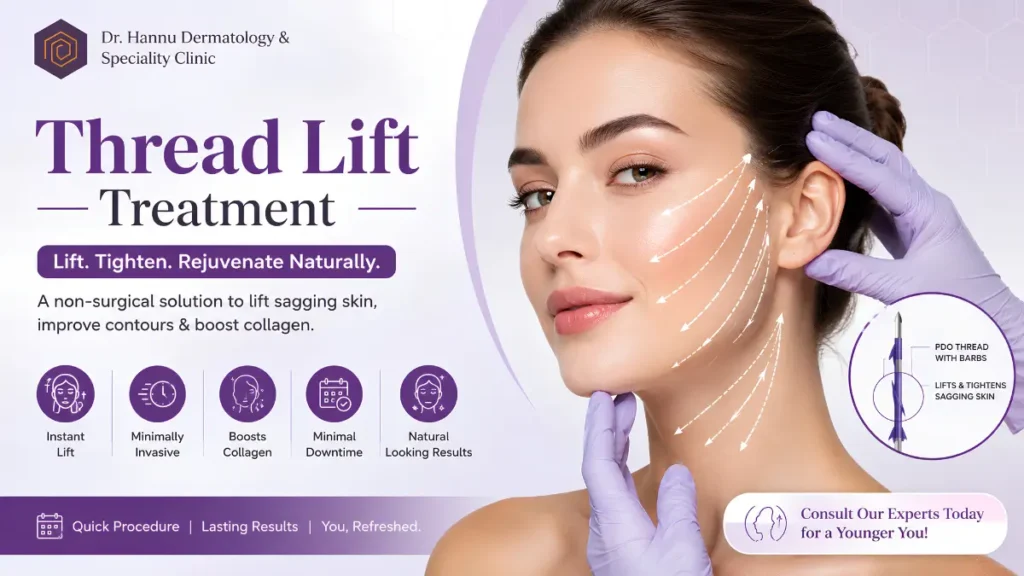
A youthful, well-defined face is often associated with healthy and firm skin. However, as we age, collagen and elastin production decrease, leading to sagging skin, drooping cheeks, jowls, and loss of facial definition. Fortunately, modern aesthetic medicine offers effective non-surgical solutions to address these concerns. One such innovative treatment is the Thread Lift Treatment.
At Hannen Hospital, we provide advanced thread lift procedures that help restore facial contours, improve skin firmness, and deliver natural-looking rejuvenation with minimal downtime.
What Is Thread Lift Treatment?
Thread lift treatment is a minimally invasive cosmetic procedure designed to lift and tighten sagging skin without the need for surgery. During the procedure, dissolvable medical-grade threads are inserted beneath the skin to reposition and support facial tissues.
These specialized threads not only provide an immediate lifting effect but also stimulate the body’s natural collagen production, resulting in firmer and healthier-looking skin over time.
Unlike traditional facelift surgery, thread lifts require no large incisions, general anesthesia, or lengthy recovery periods.
How Do Skin Boosters Work?
Thread lift treatment is a minimally invasive cosmetic procedure designed to lift and tighten sagging skin without the need for surgery. During the procedure, dissolvable medical-grade threads are inserted beneath the skin to reposition and support facial tissues.
These specialized threads not only provide an immediate lifting effect but also stimulate the body’s natural collagen production, resulting in firmer and healthier-looking skin over time.
Unlike traditional facelift surgery, thread lifts require no large incisions, general anesthesia, or lengthy recovery periods.
How Does a Thread Lift Work?
Immediate Lifting Effect
The threads used in the procedure contain tiny barbs or cones that gently grip the underlying tissues. Once inserted, the practitioner carefully adjusts the threads to lift sagging areas and improve facial contours.
Patients often notice an immediate improvement in facial definition following treatment.
Collagen Stimulation
One of the major benefits of thread lift treatment is collagen stimulation. As the threads gradually dissolve, they trigger the body’s natural healing response, encouraging collagen production around the treated areas.
Collagen helps improve skin elasticity, firmness, and texture, providing long-term rejuvenation even after the threads have dissolved.
Book Your Consultation Today!
Get the best hair transplant in Chennai at Dr. Hanan Clinic. Feel confident and proud with our expert care.
Areas That Can Be Treated with a Thread Lift
Thread lift treatment is highly versatile and can target multiple areas of the face and neck.
Face
- Sagging cheeks
- Marionette lines
- Nasolabial folds
- Jowls
Eyebrows and Forehead
- Drooping eyebrows
- Brow lifting
- Cat-eye enhancement
Jawline and Chin
- Jawline contouring
- Improved facial definition
- Reduction of mild double chin appearance
Neck
- Tightening loose neck skin
- Improving neck contours
Benefits of Thread Lift Treatment
Thread lifts have become increasingly popular due to their numerous advantages.
Non-Surgical Solution
No surgical incisions or general anesthesia are required.
Minimally Invasive
The procedure involves only small entry points with minimal tissue disruption.
Quick Treatment
Most thread lift procedures can be completed within 30 to 60 minutes.
Minimal Downtime
Patients can usually return to normal activities within a day or two.
Immediate Results
Visible lifting effects are often noticeable immediately after treatment.
Natural-Looking Enhancement
Results are subtle and natural rather than overly dramatic.
Collagen Production
Threads stimulate collagen synthesis, improving skin quality over time.
Long-Lasting Effects
Results typically last between one and three years depending on the type of thread used and individual factors.
Who Is an Ideal Candidate for Thread Lift Treatment?
Thread lift treatment is ideal for individuals experiencing mild to moderate skin laxity who want to improve facial contours without surgery.
You may be a suitable candidate if you:
- Have mild sagging of the cheeks or jawline
- Want natural facial rejuvenation
- Are seeking a non-surgical facelift alternative
- Prefer minimal downtime
- Have realistic expectations about results
The best candidates are usually between 30 and 60 years of age, although suitability depends on skin condition rather than age alone.
Types of Thread Lift Treatments
PDO Thread Lift
PDO (Polydioxanone) threads are among the most commonly used. They provide lifting effects and stimulate collagen production before naturally dissolving.
PLLA Thread Lift
PLLA (Poly-L-Lactic Acid) threads offer longer-lasting collagen stimulation and skin rejuvenation.
PCL Thread Lift
PCL (Polycaprolactone) threads are known for their durability and prolonged collagen-boosting effects.
Cog Threads
Cog threads contain barbs that grip tissue effectively, making them suitable for lifting sagging skin.
Mono Threads
Mono threads are smooth threads primarily used for collagen stimulation and skin tightening.
Thread Lift Procedure: Step-by-Step
Consultation and Assessment
The treatment begins with a detailed consultation to assess facial anatomy, skin condition, and aesthetic goals.
Treatment Planning
A personalized treatment plan is created based on the patient’s needs.
Local Anesthesia
The treatment area is numbed using local anesthesia to ensure comfort.
Thread Insertion
Specialized needles or cannulas are used to place the threads beneath the skin.
Lifting and Adjustment
The practitioner gently adjusts the threads to achieve the desired lifting effect.
Post-Treatment Care
Patients receive detailed aftercare instructions to optimize healing and results.
Recovery After Thread Lift Treatment
Recovery is generally quick and uncomplicated.
Common Side Effects
- Mild swelling
- Bruising
- Tenderness
- Temporary skin dimpling
These effects typically resolve within a few days.
Aftercare Recommendations
- Avoid strenuous exercise for one to two weeks
- Sleep on your back
- Avoid excessive facial movements
- Follow your doctor’s instructions carefully
Most individuals can resume normal activities within 24 to 48 hours.
Results and Longevity
Many patients notice immediate improvements following treatment. Over the next few months, collagen production further enhances skin firmness and texture.
Results generally last between 12 and 36 months depending on:
- Thread type
- Age
- Skin quality
- Lifestyle habits
- Collagen production levels
Maintenance treatments may help prolong results.
Thread Lift vs Other Anti-Aging Treatments
Thread Lift vs Dermal Fillers
Fillers add volume, while thread lifts physically reposition sagging tissues.
Thread Lift vs Botox
Botox relaxes facial muscles to reduce wrinkles, whereas thread lifts improve skin laxity and contour.
Thread Lift vs Surgical Facelift
A surgical facelift offers more dramatic results for severe sagging, while thread lifts are suitable for mild to moderate skin laxity.
Thread Lift vs HIFU
HIFU uses ultrasound energy to tighten skin, while thread lifts provide immediate lifting along with collagen stimulation.
Risks and Side Effects of Thread Lift Treatment
Thread lift treatment is generally considered safe when performed by experienced professionals.
Potential side effects include:
- Temporary swelling
- Bruising
- Mild discomfort
- Skin puckering
- Rare infection
- Minor asymmetry
Choosing a qualified aesthetic specialist significantly reduces the risk of complications.
Thread Lift Treatment Cost
The cost of thread lift treatment varies based on several factors.
Factors Affecting Cost
- Number of threads used
- Treatment area
- Type of threads
- Complexity of treatment
- Doctor’s expertise
- Clinic facilities
Average Cost in India
Thread lift treatment in India generally ranges from ₹30,000 to ₹80,000 or more depending on the treatment plan.
Why Choose Hannen Hospital for Thread Lift Treatment?
At Hannen Hospital, we combine advanced aesthetic technology with personalized patient care to deliver safe and effective thread lift treatments.
Our Advantages
- Experienced aesthetic specialists
- Customized treatment plans
- Advanced thread lift techniques
- Comprehensive patient consultation
- Focus on natural-looking results
- High standards of safety and hygiene
We are committed to helping patients achieve youthful, refreshed appearances without the need for invasive surgery.
Tips to Maintain Thread Lift Results
To maximize the longevity of your results:
- Follow a proper skincare routine
- Use sunscreen daily
- Stay hydrated
- Eat a balanced diet
- Avoid smoking
- Attend recommended follow-up appointments
- Consider complementary skin rejuvenation treatments
FAQs
1. What is a thread lift treatment?
A thread lift is a minimally invasive cosmetic procedure that uses dissolvable medical-grade threads to lift and tighten sagging skin while stimulating natural collagen production.
2. How long does a thread lift procedure take?
Most thread lift treatments take between 30 and 60 minutes, depending on the areas being treated and the number of threads required.
3. Is thread lift treatment painful?
The procedure is generally well tolerated because local anesthesia is used. Patients may experience mild discomfort, tightness, or tenderness for a few days after treatment.
4. How soon will I see results after a thread lift?
You can notice an immediate lifting effect after the procedure. Results continue to improve over the following weeks as collagen production increases.
5. How long do thread lift results last?
Results typically last between 1 and 3 years, depending on the type of threads used, skin condition, age, and lifestyle factors.
6. Who is a good candidate for thread lift treatment?
Individuals with mild to moderate skin sagging, early signs of aging, and those seeking a non-surgical alternative to a facelift are usually good candidates.
7. What areas can be treated with a thread lift?
Thread lifts can be used to treat the cheeks, jawline, jowls, neck, eyebrows, forehead, nasolabial folds, and marionette lines.
8. What is the recovery time after a thread lift?
Most patients can return to normal activities within 24 to 48 hours. Mild swelling or bruising may last for a few days.
9. Are thread lifts safe?
Yes, thread lifts are generally safe when performed by qualified and experienced aesthetic specialists using approved materials and proper techniques.
10. What are the possible side effects of thread lift treatment?
Temporary side effects may include swelling, bruising, tenderness, mild discomfort, and slight skin puckering. Serious complications are rare.
11. Can a thread lift replace a surgical facelift?
A thread lift is ideal for mild to moderate skin laxity. Patients with significant sagging may achieve better results with a surgical facelift.
12. What types of threads are used in thread lift treatments?
Common thread types include PDO (Polydioxanone), PLLA (Poly-L-Lactic Acid), and PCL (Polycaprolactone), each offering unique benefits and longevity.
13. Can thread lifts be combined with other aesthetic treatments?
Yes. Thread lifts are often combined with Botox, dermal fillers, PRP therapy, laser treatments, or HIFU for enhanced facial rejuvenation.
14. How much does thread lift treatment cost in India?
The cost generally ranges from ₹30,000 to ₹80,000 or more, depending on the treatment area, number of threads, and clinic expertise.
Table of Contents
Unshaven Hair Transplant Cost in Chennai – Complete Guide
Unshaven Hair Transplant Cost in Chennai – Complete Guide
Unshaven Hair Transplant Cost in Chennai – Learn what to ask your doctor to ensure a safe procedure, natural results, and long-term success.
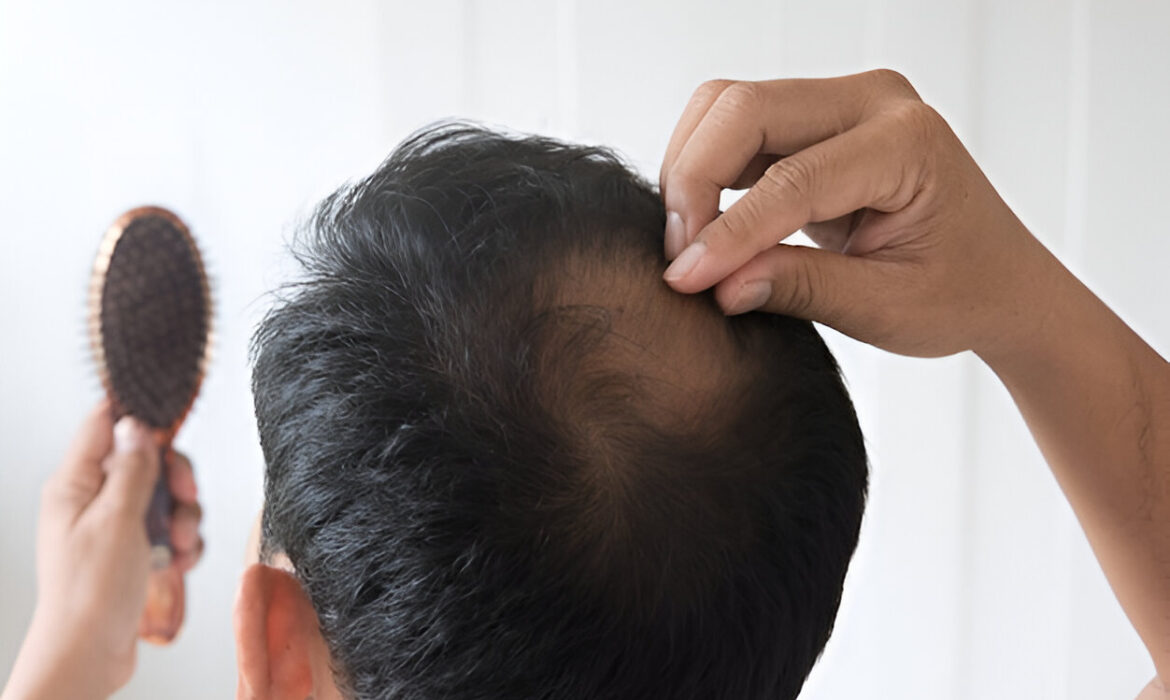
Unshaven hair transplant, also known as no-shave FUE, is a modern solution for individuals who want to restore hair without shaving their head. This technique is gaining popularity in Chennai, especially among professionals and women who prefer a discreet procedure with minimal downtime.
Cost of Unshaven Hair Transplant in Chennai
The cost typically ranges between ₹60,000 to ₹2,50,000+, depending on the number of grafts and clinic expertise. On average, the per graft cost is ₹100–₹150+, making it slightly more expensive than traditional FUE due to the precision and time involved.
Cost Overview
Treatment Type Estimated Cost Basic Procedure ₹60,000+ Moderate Coverage ₹1,00,000 – ₹1,80,000 Advanced Cases ₹2,00,000 – ₹2,50,000+
Why is It More Expensive?
Unshaven hair transplant requires surgeons to work around existing hair, making the process more complex and time-consuming (4–8 hours). It demands high expertise, advanced tools, and careful graft placement to ensure natural-looking results
Benefits
- No visible shaving
- Quick return to work
- Natural hairline results
- Ideal for small or targeted areas
Trusted Clinic in Chennai
For safe and effective results, consider Dr. Hanan Dermatology Speciality Clinic, led by Dr. Hanan Basith. With expertise in dermatology and hair restoration, the clinic offers advanced treatments tailored to individual needs.
Step-by-Step Guide to Safe Head Shaving
- Start with trimming after 1 month
- Use clean and sanitized tools
- Keep trimmer on low setting
- Avoid pressure on the scalp
- Move to razor shaving only after 3 months
- Apply soothing lotion if needed
Tips for Safe Shaving
- Wait until all scabs fall off naturally
- Avoid aggressive shaving
- Always use clean tools
- Keep the scalp hydrated
- Follow your doctor’s advice
About the Clinic – Best Skin & Hair Clinic in Chennai
Dr. Hanan Dermatology Speciality Clinic offers expert care for skin and hair treatments in Chennai.
- Advanced hair transplant techniques
- Experienced dermatologists and aesthetic specialists
- Safe and result-oriented treatments
- Modern laser and cosmetic solutions
About Dr. Hanan Basith
- MD (DVL), FFAM
- Graduate of Madras Medical College, Chennai
- Fellowship in Facial Aesthetic Medicine
- Member of IADVL, ACSI, AHRS
The clinic is widely trusted for delivering effective and affordable hair and skin treatments.
Our Specialized Services
- Hair Transplant
- Laser Hair Reduction
- Acne Scar Treatment
- Non-surgical Face Lifting
- Glutathione Treatment
FAQs
1. What is the cost of unshaven hair transplant in Chennai?
The cost usually ranges from ₹60,000 to ₹2,50,000+, depending on graft count, clinic reputation, and surgeon expertise.
2. Why is unshaven hair transplant more expensive than FUE?
It requires higher precision, more time (4–8 hours), and experienced surgeons, which increases the cost per graft.
3. How many grafts can be done without shaving?
Typically, 1000–2500 grafts can be done in one session. Larger cases may need multiple sessions.
4. Is unshaven hair transplant permanent?
Yes, the results are permanent, similar to traditional FUE, as transplanted hair grows naturally over time.
5. Is the procedure painful?
No, it is performed under local anesthesia, so patients experience minimal discomfort.
6. How long does it take to recover?
Most patients can return to work within 2–5 days, as there is no visible shaving.
7. Who is the best candidate for this procedure?
It is ideal for professionals, women, and individuals who want a discreet hair restoration without shaving.
8. Where can I get the best unshaven hair transplant in Chennai?
You can consult Dr. Hanan Dermatology Speciality Clinic, where experienced specialists provide advanced and personalized hair transplant treatments.
Book Your Consultation Today!
For Personalised Treatment visit Dr. Hanan Clinic. Feel confident and proud with our expert care.
Table of Contents
Face Sagging Treatment: Restore a Youthful and Firm Appearance
Face Sagging Treatment: Restore a Youthful and Firm Appearance
Face Sagging Treatment . Get expert, dermatologist-led care at Dr. Hanan Dermatology Speciality Clinic.
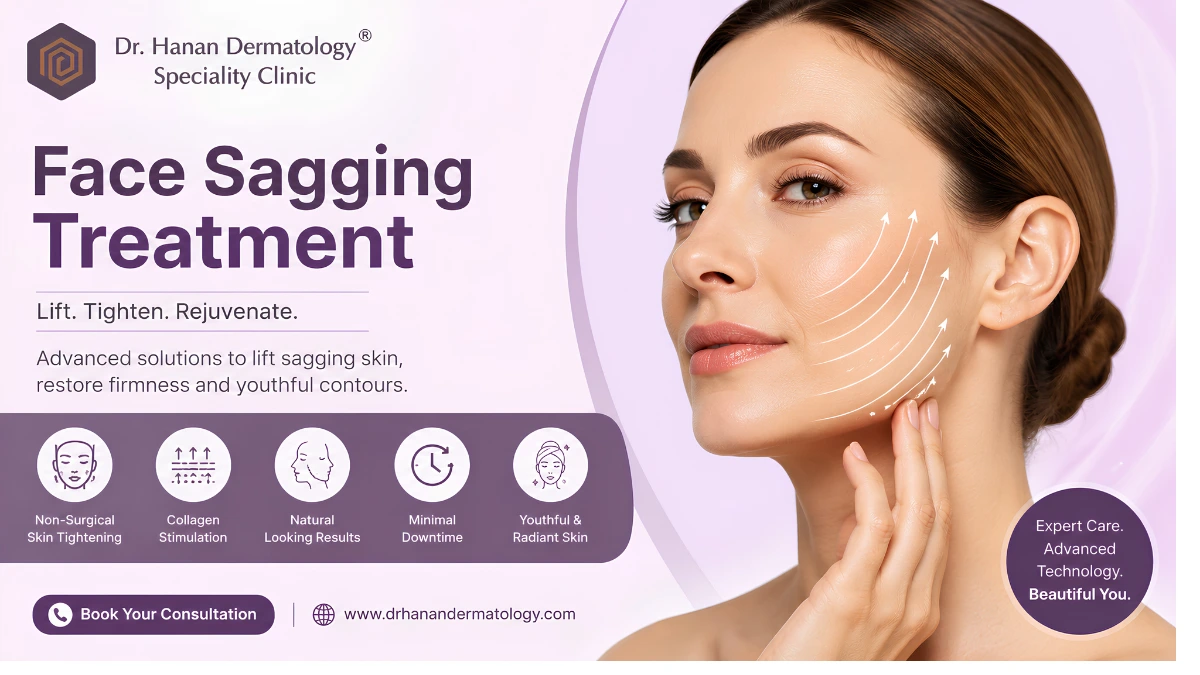
As we age, our skin naturally loses collagen, elastin, and facial volume, leading to sagging skin, jowls, and a less defined facial structure. While facial sagging is a normal part of aging, modern aesthetic treatments can effectively restore firmness and rejuvenate your appearance without compromising your natural look.
At Hannen Hospital, we offer advanced face sagging treatment solutions tailored to each patient’s skin type, age, and aesthetic goals. From non-surgical skin tightening procedures to advanced facial rejuvenation treatments, our specialists help you achieve firmer, younger-looking skin safely and effectively.
What Causes Face Sagging?
Facial sagging occurs when the skin and underlying tissues lose their strength and elasticity. Several factors contribute to this process:
Natural Aging Process
As you age, collagen and elastin production decline significantly, making the skin less firm and resilient.
Loss of Collagen and Elastin
Collagen provides structure to the skin, while elastin allows it to stretch and bounce back. Reduced production leads to loose and sagging skin.
Sun Damage
Long-term exposure to UV rays accelerates collagen breakdown, resulting in premature aging and skin laxity.
Weight Loss and Volume Reduction
Rapid weight loss can leave excess skin, especially around the cheeks, jawline, and neck.
Lifestyle Factors
Smoking, poor nutrition, inadequate hydration, stress, and lack of sleep can accelerate facial aging.
Genetic Factors
Some individuals may experience facial sagging earlier due to hereditary factors.
Common Signs of Facial Sagging
You may benefit from face sagging treatment if you notice:
- Drooping cheeks
- Loose skin around the jawline
- Development of jowls
- Deep smile lines and folds
- Sagging neck skin
- Loss of facial definition
- Wrinkles and fine lines
Benefits of Face Sagging Treatment
Professional face tightening treatments offer numerous benefits:
- Restores youthful facial contours
- Improves skin elasticity
- Enhances jawline definition
- Stimulates natural collagen production
- Reduces wrinkles and folds
- Improves overall skin texture
- Provides a refreshed and rejuvenated appearance
- Boosts confidence and self-esteem
Non-Surgical Face Sagging Treatments
Many patients prefer non-invasive treatments that provide noticeable results with minimal downtime.
HIFU (High-Intensity Focused Ultrasound)
HIFU is one of the most popular non-surgical skin tightening treatments. It uses focused ultrasound energy to stimulate collagen production deep within the skin.
Benefits of HIFU
- Non-invasive procedure
- No surgery required
- Minimal downtime
- Gradual and natural-looking lifting effect
- Long-lasting results
Radiofrequency (RF) Skin Tightening
Radiofrequency technology delivers controlled heat to the deeper layers of the skin, encouraging collagen remodeling and skin tightening.
Advantages
- Comfortable treatment
- Suitable for various skin types
- Improves skin firmness and elasticity
- Minimal recovery time
Thread Lift Treatment
Thread lifts use dissolvable medical-grade threads inserted beneath the skin to lift sagging tissues.
Benefits
- Immediate lifting effect
- Stimulates collagen production
- Minimal scarring
- Quick recovery
Laser Skin Tightening
Advanced laser treatments target deeper skin layers to improve collagen production while enhancing overall skin texture.
Benefits
- Tightens loose skin
- Improves skin tone
- Reduces wrinkles
- Enhances skin quality
Dermal Fillers for Volume Restoration
Volume loss often contributes to facial sagging. Dermal fillers restore lost volume and provide a subtle lifting effect.
Common Treatment Areas
- Cheeks
- Nasolabial folds
- Jawline
- Chin
Collagen-Stimulating Injectables
These treatments encourage the body’s natural collagen production, resulting in gradual and long-lasting facial rejuvenation.
Surgical Face Sagging Treatments
For severe facial sagging, surgery may offer the most dramatic and long-lasting results.
Facelift Surgery
A facelift removes excess skin and tightens underlying facial tissues for comprehensive rejuvenation.
Benefits
- Significant facial lifting
- Long-lasting results
- Improved facial contours
- Natural-looking enhancement
Neck Lift Surgery
A neck lift addresses sagging skin and excess fat around the neck and jawline.
Ideal For
- Turkey neck appearance
- Excess neck skin
- Loss of jawline definition
Best Face Sagging Treatment by Age Group
In Your 30s
- Preventive skincare
- HIFU
- Radiofrequency treatments
- Collagen-stimulating procedures
In Your 40s
- Thread lifts
- Fillers
- Advanced skin tightening treatments
- Combination rejuvenation procedures
In Your 50s and Beyond
- Comprehensive facial rejuvenation
- Facelift surgery
- Neck lift procedures
- Customized anti-aging treatment plans
Face Sagging Treatment Procedure: What to Expect
Initial Consultation
Our specialists conduct a detailed skin assessment to understand your concerns and goals.
Skin Analysis
We evaluate skin elasticity, facial volume loss, and the severity of sagging.
Customized Treatment Plan
A personalized treatment strategy is designed based on your age, skin condition, and desired results.
Treatment Session
Depending on the selected procedure, treatment may take between 30 minutes and several hours.
Follow-Up Care
Regular follow-up visits help monitor progress and optimize results.
Recovery and Aftercare
Proper aftercare is essential for achieving optimal results.
Recommended Aftercare
- Follow all medical instructions
- Stay hydrated
- Use prescribed skincare products
- Apply sunscreen daily
- Avoid smoking and excessive alcohol consumption
- Maintain a healthy lifestyle
Who Is an Ideal Candidate?
ou may be a suitable candidate if you:
- Have mild to severe skin laxity
- Are in good general health
- Have realistic expectations
- Want to improve facial firmness and contour
Face Sagging Treatment Procedure: What to Expect
Initial Consultation
Our specialists conduct a detailed skin assessment to understand your concerns and goals.
Skin Analysis
We evaluate skin elasticity, facial volume loss, and the severity of sagging.
Customized Treatment Plan
A personalized treatment strategy is designed based on your age, skin condition, and desired results.
Treatment Session
Depending on the selected procedure, treatment may take between 30 minutes and several hours.
Follow-Up Care
Regular follow-up visits help monitor progress and optimize results.
Face Sagging Treatment Results
Most patients notice gradual improvements in skin firmness and facial contouring.
Result Timeline
- HIFU and RF: 2-3 months
- Thread Lift: Immediate with continued improvement
- Fillers: Immediate results
- Facelift Surgery: Visible after recovery
Results vary depending on the treatment performed and individual skin characteristics.
Risks and Side Effects
While modern treatments are generally safe, some temporary side effects may occur.
Non-Surgical Treatments
- Mild redness
- Swelling
- Tenderness
- Temporary bruising
Surgical Treatments
- Swelling
- Bruising
- Temporary numbness
- Recovery-related discomfort
Choosing experienced specialists significantly reduces treatment risks.
How to Prevent Facial Sagging Naturally
You can slow down facial aging by:
- Wearing sunscreen daily
- Following a healthy diet
- Staying hydrated
- Avoiding smoking
- Managing stress
- Using collagen-supporting skincare products
- Maintaining a consistent skincare routine
FAQs
1. What is the best treatment for a sagging face?
The best face sagging treatment depends on the severity of skin laxity. Mild sagging may respond well to HIFU, radiofrequency (RF) skin tightening, or thread lifts, while moderate to severe sagging may require dermal fillers or facelift surgery for optimal results.
2. Can facial sagging be treated without surgery?
Yes. Non-surgical treatments such as HIFU, RF skin tightening, thread lifts, laser treatments, and dermal fillers can effectively improve mild to moderate facial sagging without the need for surgery.
3. How does HIFU help with face sagging?
HIFU (High-Intensity Focused Ultrasound) delivers focused ultrasound energy deep into the skin, stimulating collagen production and gradually lifting and tightening sagging areas of the face and neck.
4. How long do face sagging treatment results last?
Results vary depending on the treatment. HIFU results may last 12–18 months, thread lifts can last 1–2 years, dermal fillers typically last 6–18 months, and facelift surgery results can last several years.
5. Is face sagging treatment painful?
Most non-surgical face sagging treatments involve minimal discomfort. Patients may experience mild warmth, tingling, or pressure during the procedure. Topical numbing creams are often used to enhance comfort.
6. At what age should I start face sagging treatments?
Preventive treatments can begin in the late 20s or early 30s when collagen production starts to decline. Early intervention may help slow down the progression of facial sagging.
7. Are thread lifts effective for sagging cheeks and jawline?
Yes. Thread lifts are commonly used to lift sagging cheeks, define the jawline, and improve facial contours. They provide immediate lifting effects while stimulating collagen production.
8. How many sessions are needed for skin tightening treatments?
The number of sessions depends on the treatment type and the individual’s skin condition. Some treatments like HIFU may require only one session annually, while RF treatments may need multiple sessions for optimal results.
9. What is the recovery time after face sagging treatment?
Most non-surgical treatments have little to no downtime, allowing patients to return to normal activities quickly. Surgical procedures such as facelifts require a longer recovery period, usually several weeks.
10. Can face sagging be prevented naturally?
While aging cannot be stopped, facial sagging can be delayed by using sunscreen daily, maintaining a healthy diet, staying hydrated, avoiding smoking, managing stress, and following a consistent skincare routine.
11. Are face sagging treatments safe?
When performed by qualified dermatologists or cosmetic specialists, face sagging treatments are generally safe. A thorough consultation helps determine the most suitable treatment and minimizes potential risks.
12. Why should I choose Hannen Hospital for face sagging treatment?
Hannen Hospital offers advanced skin tightening technologies, experienced aesthetic specialists, personalized treatment plans, and comprehensive aftercare to help patients achieve natural-looking and long-lasting results.
Ready for Permanent Hair Restoration?
Wondering if a hair transplant is permanent? Book a consultation with our specialists and get personalized guidance for long-lasting results!
Table of Contents
Wrinkles Treatment in Chennai – Restore Youthful, Radiant Skin at Hannen Hospital
Wrinkles Treatment in Chennai – Restore Youthful, Radiant Skin
Wrinkles Treatment in Chennai . Get expert, dermatologist-led care at Dr. Hanan Dermatology Speciality Clinic.
Wrinkles Treatment in Chennai: Aging is a natural process, but wrinkles and fine lines can make you look older than you feel. Factors such as sun exposure, pollution, stress, and lifestyle habits can accelerate skin aging, leading to visible wrinkles and loss of skin elasticity. Fortunately, modern dermatology offers advanced solutions to reduce wrinkles and rejuvenate your skin.
At Hannen clinic, we provide personalized wrinkles treatment in Chennai using the latest anti-aging technologies. Our expert dermatologists create customized treatment plans to help patients achieve smoother, firmer, and younger-looking skin with safe and effective procedures.
What Are Wrinkles?
Wrinkles are lines, creases, or folds that develop on the skin as collagen and elastin production decreases with age. While wrinkles are a normal part of aging, premature wrinkles can occur due to environmental and lifestyle factors.
Types of Wrinkles
Dynamic Wrinkles
These appear due to repeated facial expressions such as smiling, frowning, or squinting.
Static Wrinkles
These wrinkles remain visible even when the face is at rest and are primarily caused by aging and collagen loss.
Fine Lines
Early signs of aging that commonly appear around the eyes and mouth.
Deep Wrinkles
More pronounced folds that develop over time due to significant collagen depletion.
Common Areas Affected by Wrinkles
- Forehead
- Around the eyes (crow’s feet)
- Between the eyebrows
- Around the mouth
- Neck and jawline
What Causes Wrinkles?
Several factors contribute to wrinkle formation:
Natural Aging
As we age, the skin produces less collagen and elastin, resulting in reduced firmness and elasticity.
Sun Exposure
Ultraviolet (UV) rays damage collagen fibers and accelerate skin aging.
Smoking
Smoking reduces blood flow to the skin and promotes premature wrinkles.
Stress and Poor Sleep
Chronic stress and inadequate sleep affect skin repair and collagen production.
Environmental Pollution
Exposure to pollutants can increase oxidative stress and skin damage.
Dehydration and Poor Skincare
Lack of hydration and improper skincare can make fine lines more noticeable.
Signs You May Need Wrinkle Treatment
You may benefit from professional wrinkle treatment if you notice:
- Fine lines becoming more visible
- Deep facial creases
- Sagging skin
- Loss of skin firmness
- Uneven skin texture
- Dull and tired-looking skin
Advanced Wrinkle Treatments Available at Hannen Hospital
At Hannen Hospital, we offer a comprehensive range of anti-aging treatments tailored to individual skin concerns.
Botox Treatment
Botox is one of the most popular non-surgical treatments for dynamic wrinkles.
Benefits of Botox
- Reduces forehead lines
- Minimizes crow’s feet
- Softens frown lines
- Quick procedure with minimal downtime
- Natural-looking results
Dermal Fillers
Dermal fillers restore lost facial volume and smooth out deep wrinkles.
Ideal For
- Nasolabial folds
- Marionette lines
- Hollow cheeks
- Volume loss associated with aging
Microneedling
Microneedling stimulates collagen production by creating controlled micro-injuries in the skin.
Benefits
- Improved skin texture
- Reduction in fine lines
- Enhanced collagen production
- Firmer and smoother skin
Radiofrequency (RF) Skin Tightening
RF therapy uses heat energy to stimulate collagen remodeling and tighten loose skin.
Advantages
- Non-invasive treatment
- Improved skin elasticity
- Reduced wrinkles
- Minimal recovery time
Laser Skin Resurfacing
Advanced laser technology removes damaged skin layers and encourages new collagen formation.
Results Include
- Smoother skin texture
- Reduction in wrinkles
- Improved skin tone
- Enhanced skin rejuvenation
Chemical Peels
Chemical peels exfoliate the skin and promote cell turnover.
Benefits
- Brighter complexion
- Reduced pigmentation
- Improved fine lines
- Refreshed skin appearance
PRP Therapy (Platelet-Rich Plasma)
PRP uses the patient’s own growth factors to stimulate natural skin rejuvenation.
Why Choose PRP?
- Natural anti-aging solution
- Improved collagen production
- Enhanced skin quality
- Minimal risk of allergic reactions
Benefits of Professional Wrinkle Treatment
Choosing professional wrinkle treatment offers numerous advantages:
- Reduction in fine lines and wrinkles
- Increased collagen production
- Improved skin firmness
- Better skin texture
- Youthful appearance
- Non-surgical treatment options
- Long-lasting results
Why Choose Hannen clinic for Wrinkles Treatment in Chennai?
Experienced Dermatologists
Our specialists have extensive experience in aesthetic dermatology and anti-aging treatments.
Personalized Treatment Plans
Every patient receives a customized treatment strategy based on skin type, age, and aesthetic goals.
Advanced Technology
We utilize state-of-the-art equipment and proven treatment techniques for optimal results.
Safe and Effective Procedures
All treatments are performed following strict safety standards to ensure patient comfort and satisfaction.
Comprehensive Skin Evaluation
We conduct detailed skin assessments before recommending any procedure.
Modern Dermatology Facilities
Hannen Hospital offers a comfortable and professional environment with advanced skincare solutions.
Who Is an Ideal Candidate for Wrinkle Treatment?
Wrinkle treatment may be suitable for:
- Men and women experiencing signs of aging
- Individuals with fine lines and wrinkles
- Patients seeking non-surgical anti-aging solutions
- Those looking to improve skin texture and elasticity
What to Expect During Your Consultation?
During your consultation at Hannen Hospital, our dermatologist will:
- Assess your skin condition.
- Evaluate wrinkle severity.
- Discuss your aesthetic concerns.
- Recommend suitable treatment options.
- Create a customized treatment plan.
Wrinkles Treatment Cost in Chennai
The cost of wrinkle treatment varies depending on several factors:
- Type of treatment selected
- Number of sessions required
- Treatment area
- Technology used
- Individual skin condition
At Hannen Hospital, we provide transparent pricing and customized treatment plans to suit your needs.
Tips to Prevent Wrinkles
Although aging cannot be stopped, you can slow the development of wrinkles by:
- Using sunscreen daily
- Staying hydrated
- Following a healthy diet
- Avoiding smoking
- Getting adequate sleep
- Maintaining a proper skincare routine
- Scheduling regular dermatologist visits
FAQs
1. What is the most effective treatment for wrinkles?
The most effective treatment depends on the type and severity of wrinkles. Botox is ideal for dynamic wrinkles, while dermal fillers, laser resurfacing, microneedling, and RF skin tightening are effective for deeper lines and skin rejuvenation.
2. Can wrinkles be treated without surgery?
Yes. Most wrinkle treatments available at Hannen Hospital are non-surgical, including Botox, fillers, PRP therapy, microneedling, chemical peels, and laser treatments.
3. How much does wrinkles treatment cost in Chennai?
The cost varies based on the treatment type, treatment area, number of sessions required, and individual skin concerns. A consultation with a dermatologist can provide an accurate estimate.
4. Is Botox safe for wrinkle reduction?
Yes. Botox is an FDA-approved treatment and is considered safe when administered by experienced dermatologists. It effectively reduces forehead lines, crow’s feet, and frown lines.
5. How long do wrinkle treatment results last?
Results vary by treatment. Botox typically lasts 3–6 months, dermal fillers can last 6–18 months, and collagen-stimulating treatments like microneedling and RF therapy may provide longer-lasting improvements with maintenance sessions.
6. At what age should I start wrinkle treatments?
Many people begin preventive anti-aging treatments in their late 20s or early 30s. However, wrinkle treatments can be beneficial at any age depending on skin condition and aesthetic goals.
7. Does laser treatment permanently remove wrinkles?
Laser treatments significantly reduce wrinkles and stimulate collagen production, but they do not permanently stop the aging process. Maintenance treatments and proper skincare help preserve results.
8. What is the recovery time after wrinkle treatment?
Recovery time depends on the procedure. Botox and fillers usually have little to no downtime, while laser resurfacing and chemical peels may require a few days to a couple of weeks for full recovery.
9. Are wrinkle treatments suitable for all skin types?
Most modern wrinkle treatments can be customized for different skin types and tones. A dermatologist will recommend the safest and most effective option based on your skin assessment.
10. Can wrinkle treatments make me look natural?
Yes. At Hannen Hospital, treatments are carefully tailored to provide subtle, natural-looking rejuvenation while maintaining your unique facial expressions and features.
11. What causes wrinkles to develop early?
Premature wrinkles can be caused by excessive sun exposure, smoking, pollution, stress, poor diet, dehydration, lack of sleep, and inadequate skincare habits.
12. How can I prevent wrinkles from worsening?
You can slow wrinkle formation by wearing sunscreen daily, following a healthy skincare routine, staying hydrated, eating a balanced diet, avoiding smoking, and scheduling regular dermatology check-ups.
13. Is microneedling effective for wrinkles?
Yes. Microneedling stimulates natural collagen production, improves skin texture, reduces fine lines, and helps create firmer, younger-looking skin.
14. How many sessions are required for wrinkle treatment?
The number of sessions varies depending on the chosen treatment and the severity of wrinkles. Some procedures show results after one session, while others may require multiple treatments for optimal outcomes.
15. Why choose Hannen Hospital for wrinkles treatment in Chennai?
Hannen Hospital offers expert dermatologists, advanced anti-aging technologies, personalized treatment plans, safe procedures, and comprehensive skin rejuvenation solutions to help patients achieve youthful, healthy-looking skin.
Ready for Permanent Hair Restoration?
Wondering if a hair transplant is permanent? Book a consultation with our specialists and get personalized guidance for long-lasting results!
Table of Contents
Anti Ageing Treatment in Chennai – Restore Youthful, Healthy & Radiant Skin
Anti Ageing Treatment in Chennai – Restore Youthful, Healthy & Radiant Skin
Anti Ageing Treatment in Chennai. Get expert, dermatologist-led care at Dr. Hanan Dermatology Speciality Clinic.
Aging is a natural process, but its visible effects on the skin can often make individuals feel less confident about their appearance. Fine lines, wrinkles, sagging skin, pigmentation, and loss of facial volume are common concerns that develop with age. Fortunately, advanced anti ageing treatments can effectively reduce these signs and help maintain youthful, healthy-looking skin.
At Hannen Hospital, we offer personalized anti ageing treatments in Chennai designed to rejuvenate your skin, boost collagen production, and restore your natural glow. Using advanced aesthetic technologies and expert care, our specialists create customized treatment plans tailored to your skin type and aesthetic goals.
What Is Anti Ageing Treatment?
Anti ageing treatment refers to a range of cosmetic and dermatological procedures aimed at preventing, slowing down, or reversing visible signs of aging. These treatments improve skin texture, firmness, hydration, and elasticity while minimizing wrinkles, pigmentation, and volume loss.
Whether you are looking for preventive care in your 30s or corrective solutions for mature skin, anti ageing treatments can help you achieve a fresher and more youthful appearance.
Common Signs of Skin Aging
As the skin ages, several changes become noticeable:
Fine Lines and Wrinkles
Repeated facial expressions and reduced collagen production contribute to wrinkles around the eyes, forehead, and mouth.
Loss of Skin Elasticity
The skin gradually loses its ability to bounce back, leading to loose and sagging skin.
Sagging Skin
A decrease in collagen and elastin causes the skin to droop, particularly around the cheeks, jawline, and neck.
Age Spots and Pigmentation
Years of sun exposure can lead to dark spots, uneven skin tone, and hyperpigmentation.
Dull and Uneven Skin Tone
Slower cell turnover can make the skin appear tired, rough, and less radiant.
Volume Loss in the Face
Loss of facial fat and collagen can create hollow cheeks and a sunken appearance.
Causes of Premature Aging
Several factors can accelerate the aging process:
- Excessive sun exposure and UV damage
- Environmental pollution
- Smoking and alcohol consumption
- Poor dietary habits
- Chronic stress
- Lack of sleep
- Dehydration
- Natural aging and genetics
Understanding these factors can help in adopting preventive skincare and treatment strategies.
Anti Ageing Treatments Available in Chennai
At Hannen Hospital, we provide a variety of advanced anti ageing solutions tailored to individual needs.
Botox for Wrinkles
Botox is one of the most popular non-surgical anti ageing treatments. It relaxes facial muscles responsible for dynamic wrinkles, reducing forehead lines, frown lines, and crow’s feet.
Dermal Fillers
Dermal fillers restore lost facial volume, smooth deep wrinkles, and enhance facial contours for a naturally youthful appearance.
PRP (Platelet-Rich Plasma) Therapy
PRP therapy utilizes the body’s natural growth factors to stimulate collagen production, improve skin texture, and enhance overall skin quality.
Microneedling
Microneedling creates controlled micro-injuries in the skin, triggering collagen and elastin production. It effectively reduces wrinkles, scars, and enlarged pores.
Chemical Peels
Chemical peels exfoliate damaged skin layers, revealing smoother, brighter, and more even-toned skin while reducing pigmentation and fine lines.
Laser Skin Rejuvenation
Laser treatments target pigmentation, sun damage, and wrinkles while promoting collagen remodeling for tighter and healthier skin.
HIFU (High-Intensity Focused Ultrasound)
HIFU is a non-invasive facelift treatment that tightens and lifts sagging skin without surgery or significant downtime.
Skin Boosters
Skin boosters deeply hydrate the skin from within, improving elasticity, texture, and overall radiance.
Benefits of Anti Ageing Treatments
Choosing professional anti ageing treatments offers numerous benefits:
- Reduction in fine lines and wrinkles
- Improved skin firmness and elasticity
- Enhanced collagen production
- Better skin hydration
- Brighter and more even skin tone
- Natural-looking facial rejuvenation
- Increased self-confidence
Who Is an Ideal Candidate for Anti Ageing Treatments?
Anti ageing treatments are suitable for:
- Men and women experiencing early or advanced signs of aging
- Individuals with sun-damaged skin
- Patients seeking non-surgical facial rejuvenation
- Adults interested in preventive anti-ageing care
- Individuals looking to improve skin quality and appearance
A professional consultation helps determine the most appropriate treatment approach.
What to Expect During the Treatment?
Consultation and Skin Assessment
Your journey begins with a detailed skin analysis and discussion of your concerns and goals.
Customized Treatment Plan
Our specialists develop a personalized treatment strategy based on your skin condition and desired outcomes.
Procedure Details
The selected treatment is performed using advanced techniques and modern equipment to ensure safety and effectiveness.
Post-Treatment Care
Patients receive comprehensive aftercare instructions to optimize healing and maintain results
Why Choose Hannen Hospital for Anti Ageing Treatment in Chennai?
Hannen Hospital is committed to delivering safe, effective, and personalized aesthetic care.
Experienced Specialists
Our skilled professionals have extensive experience in advanced anti-ageing procedures.
Advanced Technology
We utilize modern aesthetic equipment and evidence-based treatment protocols.
Personalized Care
Every treatment plan is customized to suit individual skin concerns and goals.
Safe and Proven Procedures
Patient safety and satisfaction remain our highest priorities.
Comprehensive Skin Rejuvenation Solutions
From preventive skincare to advanced aesthetic procedures, we offer complete anti-ageing care under one roof.
Cost of Anti Ageing Treatment in Chennai
The cost of anti ageing treatment varies depending on:
- Type of procedure selected
- Number of treatment sessions
- Severity of skin concerns
- Combination treatments required
- Individual treatment goals
Results and Longevity of Anti Ageing Treatments
Many patients notice visible improvements within days to weeks after treatment. The longevity of results depends on the procedure performed, lifestyle habits, skincare maintenance, and individual skin characteristics.
Regular maintenance sessions and a proper skincare routine can help prolong the benefits and keep your skin looking youthful for longer.
FAQs
1. What is the best anti ageing treatment in Chennai?
The best treatment depends on your skin concerns. Popular options include Botox, dermal fillers, PRP therapy, microneedling, HIFU, and laser skin rejuvenation.
2. At what age should I start anti ageing treatments?
Preventive treatments can begin in the late 20s or early 30s, while corrective treatments are suitable at any age.
3. Are anti ageing treatments safe?
Yes. When performed by qualified professionals, anti ageing treatments are generally safe and effective.
4. How long do anti ageing treatment results last?
Results vary by treatment type. Some procedures last several months, while others may provide benefits for a year or more.
5. Is there any downtime after anti ageing procedures?
Most non-surgical anti ageing treatments involve minimal downtime, allowing patients to resume normal activities quickly.
6. Can multiple anti ageing treatments be combined?
Yes. Combination treatments often provide more comprehensive and long-lasting rejuvenation results.
7. How many sessions are required?
The number of sessions depends on the chosen treatment and individual skin condition.
8. How much does anti ageing treatment cost in Chennai?
Costs vary based on the procedure, treatment area, and number of sessions required. A consultation is recommended for accurate pricing.
Ready for Permanent Hair Restoration?
Wondering if a hair transplant is permanent? Book a consultation with our specialists and get personalized guidance for long-lasting results!