
Female Hair Transplant: A Complete Guide for Women Experiencing Hair Loss
Female Hair Transplant: A Complete Guide for Women Experiencing Hair Loss
Discover the key benefits of female hair transplant for permanent, natural-looking hair restoration. Get expert, dermatologist-led treatment at Dr. Hanan Dermatology Speciality Clinic, Chennai.
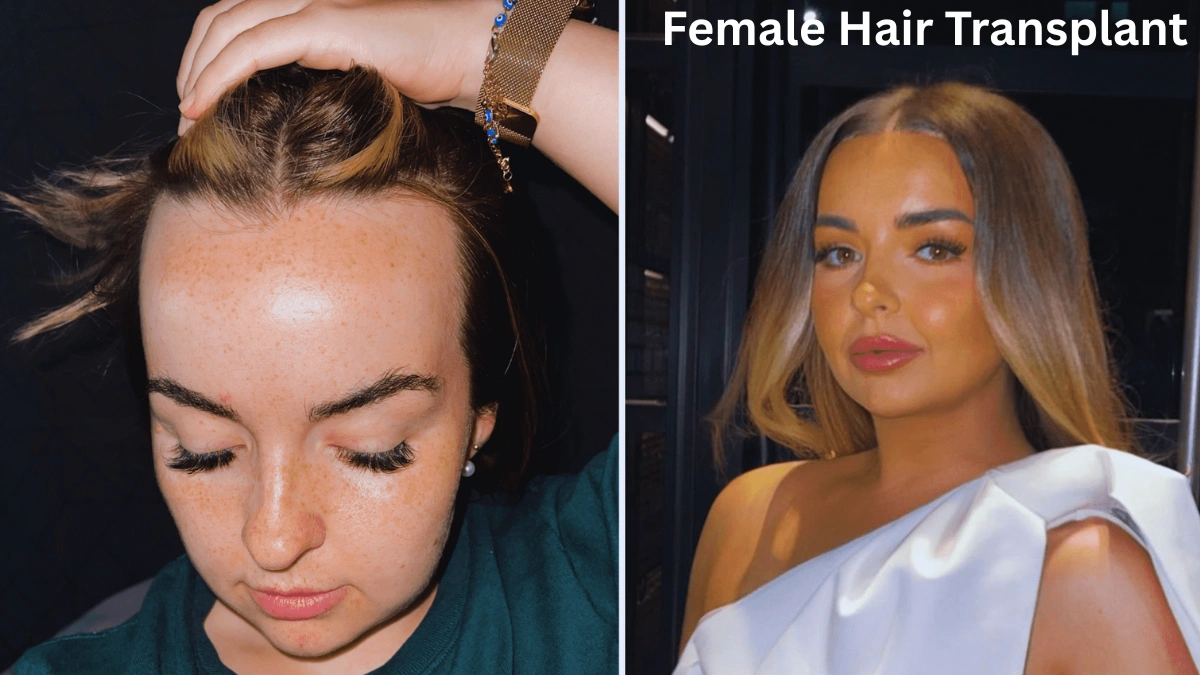
Female Hair Transplant: Hair loss is not just a men’s concern. Millions of women experience thinning hair, widening part lines, receding hairlines, or bald patches due to hormonal changes, genetics, stress, or medical conditions. A female hair transplant is an advanced, dermatologist-approved solution designed specifically for women to restore hair density while maintaining a natural, feminine appearance.
Unlike male hair restoration, female hair transplant procedures require a highly customized approach, making expert evaluation and technique selection crucial for success.
Understanding Hair Loss in Women
Hair loss in women can be temporary or permanent, depending on the cause. Common reasons include:
Hormonal imbalance (PCOS, menopause, post-pregnancy)
Genetic predisposition (female pattern hair loss)
Chronic stress or illness
Thyroid disorders
Nutritional deficiencies
Traction from tight hairstyles or extensions
A proper diagnosis is essential before deciding on a hair transplant, as some types of hair loss respond better to medical treatment than surgery.
Common Female Hair Loss Patterns
Women experience hair loss differently from men. The most common patterns include:
Female Pattern Hair Loss (FPHL): Gradual thinning over the crown and part line
Diffuse Thinning: Overall reduction in hair density
Traction Alopecia: Hair loss caused by tight hairstyles
Alopecia Areata: Patchy hair loss due to autoimmune causes
Scarring Alopecia: Permanent hair loss from injury or inflammation
Each pattern requires a tailored treatment plan to achieve natural results.
What Is a Female Hair Transplant?
A female hair transplant involves relocating healthy hair follicles from a donor area (usually the back or sides of the scalp) to thinning or bald areas. The goal is to restore volume, improve density, and create a natural hairline that blends seamlessly with existing hair.
Common areas treated include:
Frontal hairline
Crown and mid-scalp
Widening part lines
Scarred areas
Eyebrows (in select cases)
Who Is an Ideal Candidate for Female Hair Transplant?
Women may be suitable candidates if they:
Have stable hair loss with visible thinning or bald areas
Possess a healthy donor area with sufficient hair density
Have realistic expectations about results
Have not responded adequately to medical treatments alone
Women with active hair shedding conditions may need medical management before considering surgery.
Hair Transplant Techniques for Women
FUE (Follicular Unit Extraction)
FUE is the most commonly recommended technique for women because it:
Leaves no linear scar
Is ideal for diffuse thinning
Allows flexible donor area selection
Provides natural-looking density
FUT (Strip Method)
FUT may be considered in select cases where a larger number of grafts are needed. However, it involves a linear scar and is less commonly preferred for women.
Donor Area Selection & Hairline Design
Successful female hair transplantation depends heavily on:
Careful donor area selection to prevent visible thinning
Precision graft extraction
Customized hairline and density planning
Matching hair direction, angle, and texture
Expert planning ensures the results look natural and feminine.
Step-by-Step Female Hair Transplant Procedure
Detailed consultation and scalp analysis
Local anesthesia for comfort
Graft extraction from donor area
Careful implantation into thinning regions
Procedure duration: typically 4–8 hours, depending on graft count
The procedure is safe, minimally invasive, and performed as a day-care treatment.
Recovery & Aftercare
Mild scabbing and redness for 7–10 days
Gentle hair washing as advised by the dermatologist
Return to work within a few days
Avoid strenuous exercise for 2–3 weeks
Following aftercare instructions is vital for optimal graft survival.
Hair Growth Timeline & Results
Temporary shedding (shock loss) may occur in the first few weeks
New hair growth begins around 3–4 months
Noticeable density improvement by 6–9 months
Final results visible in 9–12 months
Transplanted hair is generally permanent, provided underlying hair health is maintained.
Female hair transplant is considered safe when performed by experienced dermatologists. Possible mild side effects include:
Temporary swelling or redness
Shock loss
Minimal infection risk
These risks are significantly reduced in certified, medically supervised clinics.
Maintenance & Long-Term Hair Care
To protect existing hair and enhance results, doctors may recommend:
Topical treatments like Minoxidil
PRP (Platelet-Rich Plasma) therapy
Nutritional support and scalp care routines
Ongoing care helps maintain overall hair health and density.
Table of Contents
Hair Regrowth Treatments vs Hair Transplant – What Works Best in 2025?
Hair Regrowth Treatments vs Hair Transplant – What Works Best in 2025?
Hair transplant or regrowth treatments? Find out what works best in 2025 with expert tips from Dr. Hanan Clinic, Chennai.
Hair loss is no longer a cosmetic concern-it affects confidence, social life and emotional welfare. With modern progress, 2025 provides several clinically proven options to combat baldness and thin hair. But the question is: Hair Regrowth Treatments vs. Hair Transplant – What does the best work in 2025?
Dr. in Chennai In Hanan Dermatology Specialty and Trichology Clinic, we specialize in both surgical and non-surgical solutions for hair loss. In this blog, we compare two most demanding approaches Non-invasive regrowth treatment and permanent hair transplant surgery-to help you decide which path is right for your skull and your goals.
Understanding the Root of the Problem: Why Hair Loss Happens
Before comparing treatments, it’s important to understand why hair loss occurs:
- Androgenetic Alopecia (pattern baldness)
- Hormonal imbalances (thyroid, PCOS)
- Nutritional deficiencies (iron, biotin, vitamin D)
- Stress & lifestyle factors
- Autoimmune diseases (alopecia areata)
- Medications and treatments (chemotherapy)
Different causes require different treatments—this is why scalp diagnosis is crucial.
What Are Hair Regrowth Treatments?
Hair regrowth treatments are non-surgical methods designed to stimulate dormant hair follicles and slow down further damage. In 2025, these treatments have become more targeted, effective and customized.
1. PRP (Platelet-Rich Plasma) Therapy
PRP is a regenerative treatment that uses components from its own blood to heal and rejuvenate hair follicles. A small amount of your blood is drawn, centrifuged to
Benefits:
- Improves hair density by reactivating dormant follicles
- Minimizes hair shedding and slows hair thinning progression
- Minimal downtime and suitable for most scalp types
Best for:
- Early-stage hair thinning in men and women
- Patients seeking a natural, non-surgical option
- Women with postpartum or hormonal hair loss
Caution:
- Multiple sessions are often required
- Visible results may take 2–3 months
- Should be performed in sterile environments to avoid infections
Microneedling with Exosomes
Microneedling with exosomes combines physical stimulation (microneedling) with the biological power of exosome-cell-retired messengers packed with growth factors and regenerative proteins. The micro injuries created by needles allow exosomes to penetrate and rejuvenate the hair follicle.
Benefits:
- Accelerates hair regrowth faster than PRP
- Improves follicle activity, density, and strand thickness
- Excellent for resistant areas that failed with PRP or medications
Best for:
- Diffuse thinning in both men and women
- Post-transplant scalp stimulation
- Those looking for cutting-edge, regenerative therapy
Caution:
- Requires sterile, controlled application
- Slight redness or sensitivity for 24–48 hours
- Premium cost compared to traditional PRP
Low-Level Laser Therapy (LLLT)
LLLT is a painless, light-based therapy that uses red or close light to stimulate cellular activity in hair follicles. It improves blood circulation and cellular energy, which helps the hair grow thicker and healthy over time.
Benefits:
- Non-invasive and safe for long-term use
- Enhances hair shaft strength and density
- Convenient for home or in-clinic use (helmet or cap-based devices)
Best for:
- Mild to moderate hair thinning
- Post-transplant or post-PRP maintenance
- Individuals with scalp sensitivity to topical treatments
Caution:
- Requires regular use (3–4 times/week)
- Results are gradual over 3–6 months
- Effectiveness varies by device and consistency
Prescription Medications (Minoxidil, Finasteride, Dutasteride)
Prescription medication remains one of the most widely used and medical approved treatments for hair loss in 2025. These drugs work either by increasing the blood circulation to the hair follicles or by reducing the production of dihydrotestosterone (DHT), the hormone that is mainly responsible for Androgenetic alopecia (pattern baldness).
Minoxidil is a topical solution or foam that stimulates hair growth by widening blood vessels and by improving oxygen, nutrients and blood flow. It is effective for both men and women and is available over-the-counter.
Finasteride and dutasteride are oral medications that inhibit the conversion of testosterone to DHT. While Finasteride FDA-approved, Dutasteride is considered more powerful and is often used in India under dermatologist guidance.
Benefits:
- Scientifically proven to reduce hair fall and improve density
- Easy to incorporate into daily routines
- Can be combined with PRP, LLLT, or microneedling for synergistic effects
Best for:
- Men with male pattern hair loss
- Women with hormonal hair thinning (Minoxidil only)
- Patients not ready for surgery or as post-transplant maintenance
Caution:
- Results vary by individual and take 3–6 months of consistent use
- Side effects may include scalp irritation (Minoxidil) or sexual dysfunction (Finasteride/Dutasteride), so ongoing medical supervision is advised
At Dr. Hanan Clinic, we personalize your medication plan based on your scalp type, hair loss pattern, and lifestyle. We also monitor your response with regular follow-ups to ensure safety and effectiveness.
Prescription medications work by targeting the root causes of hair loss—such as DHT sensitivity or poor blood circulation to the follicles. These include both topical and oral medications that are widely used and FDA-approved.
Benefits:
- Affordable and easy to use
- Scientifically proven to slow hair loss and promote regrowth
- Can be combined with PRP or microneedling for better results
Best for:
- Men with male pattern baldness (especially Finasteride and Dutasteride)
- Women with thinning due to hormonal imbalance (Minoxidil)
- Patients not ready for surgical intervention
Note: These medications must be used consistently and under medical supervision to prevent side effects and sustain long-term benefits.
Benefits:
- Affordable
- FDA-approved
Best for:
- Early to moderate pattern baldness
- Those looking for gradual improvement
What Is a Hair Transplant?
Hair transplant is a surgical procedure where hair follicles from a donor area (usually the back of the scalp) are moved to balding areas. It is the most permanent solution available in 2025.
There are two main techniques:
FUE (Follicular Unit Extraction)
Follicles are extracted individually with tiny punches and implanted in recipient zones.
Benefits:
- No linear scar
- Shorter recovery
- Natural-looking results
FUT (Follicular Unit Transplantation)
A strip of scalp is removed and grafts are prepared from it.
Benefits:
- More grafts in one session
- Suitable for larger bald patches
What Is the Best Hair Transplant Technology in 2025?
Great question (and thank you Google’s People Also Ask!).
In 2025, the most advanced techniques include:
- Sapphire FUE: Uses sapphire blades for precision
- Robotic-assisted Hair Transplantation: AI-based graft harvesting
- DHI (Direct Hair Implantation): No channel opening step, more control
At Dr. Hanan Clinic, we combine these advanced tools with dermatologist-level planning for natural hairlines and higher graft survival.
Hair Regrowth Treatments vs Hair Transplant – Key Comparison
Feature | Hair Regrowth Treatments | Hair Transplant |
Type | Non-surgical | Surgical |
Suitability | Early to moderate hair loss | Advanced baldness (Grade 3+) |
Downtime | Minimal to none | 3–7 days recovery |
Cost | Lower per session | One-time higher cost |
Results | Gradual, needs maintenance | Permanent, fuller coverage |
Side Effects | Minimal | Mild swelling, crusting |
Maintenance | Required (every 1–3 months) | PRP or LLLT optional for existing hair |
When to Choose Hair Regrowth Treatments
Choose non-surgical regrowth options if:
- You’re under 35
- Hair loss is recent or mild
- You want a gradual, non-invasive solution
- You are medically unfit for surgery
When to Choose Hair Transplant
Opt for a transplant if:
- You have visible bald patches (Grade 3 and above)
- You want long-lasting, high-density results
- You’ve already tried PRP, meds, or LLLT with limited success
- You have a strong donor area
Our Expert Advice: What We Recommend in 2025
At Dr. Hanan Dermatology Speciality and Trichology Clinic in Chennai, we don’t believe in one-size-fits-all. Our treatment strategy is always:
1. Diagnose First – Using digital scalp mapping and hair density analysis
2. Customize Treatment – PRP, microneedling, medications, transplant – or a combination
3. Track Results – Monthly follow-ups, maintenance planning, lifestyle advice
Our hybrid approach means many patients avoid surgery altogether with the right early intervention.
Why Choose Dr. Hanan Clinic in Chennai?
- 800+ 5-star reviews
- Team of certified dermatologists & trichologists
- Latest in FUE, PRP, Exosome, and Laser technology
- Customized plans for every hair type, age, and stage of hair loss
We are Chennai’s authority in hair restoration, blending medical expertise with the latest innovations.
Conclusion: Which Works Best in 2025?
Hair Regrowth Treatments are ideal if you’re catching the problem early and want to delay or avoid surgery.
Hair Transplant is best for those looking for a permanent fix for visible baldness.
But the ultimate solution? A doctor-designed combination plan customized just for you.
Book Your Consultation Today!
For Personalised Treatment visit Dr. Hanan Clinic. Feel confident and proud with our expert care.