
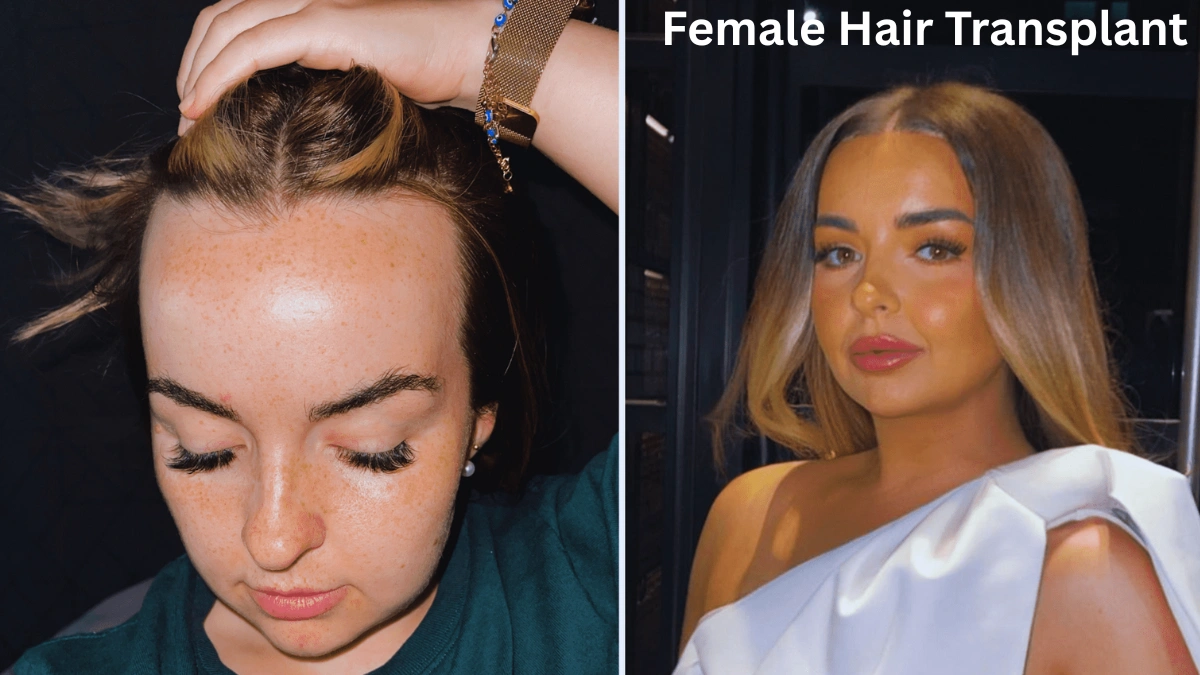
Female Hair Transplant: A Complete Guide for Women Experiencing Hair Loss
Female Hair Transplant: A Complete Guide for Women Experiencing Hair Loss
Discover the key benefits of female hair transplant for permanent, natural-looking hair restoration. Get expert, dermatologist-led treatment at Dr. Hanan Dermatology Speciality Clinic, Chennai.
Female Hair Transplant: Hair loss is not just a men’s concern. Millions of women experience thinning hair, widening part lines, receding hairlines, or bald patches due to hormonal changes, genetics, stress, or medical conditions. A female hair transplant is an advanced, dermatologist-approved solution designed specifically for women to restore hair density while maintaining a natural, feminine appearance.
Unlike male hair restoration, female hair transplant procedures require a highly customized approach, making expert evaluation and technique selection crucial for success.
Understanding Hair Loss in Women
Hair loss in women can be temporary or permanent, depending on the cause. Common reasons include:
Hormonal imbalance (PCOS, menopause, post-pregnancy)
Genetic predisposition (female pattern hair loss)
Chronic stress or illness
Thyroid disorders
Nutritional deficiencies
Traction from tight hairstyles or extensions
A proper diagnosis is essential before deciding on a hair transplant, as some types of hair loss respond better to medical treatment than surgery.
Common Female Hair Loss Patterns
Women experience hair loss differently from men. The most common patterns include:
Female Pattern Hair Loss (FPHL): Gradual thinning over the crown and part line
Diffuse Thinning: Overall reduction in hair density
Traction Alopecia: Hair loss caused by tight hairstyles
Alopecia Areata: Patchy hair loss due to autoimmune causes
Scarring Alopecia: Permanent hair loss from injury or inflammation
Each pattern requires a tailored treatment plan to achieve natural results.
What Is a Female Hair Transplant?
A female hair transplant involves relocating healthy hair follicles from a donor area (usually the back or sides of the scalp) to thinning or bald areas. The goal is to restore volume, improve density, and create a natural hairline that blends seamlessly with existing hair.
Common areas treated include:
Frontal hairline
Crown and mid-scalp
Widening part lines
Scarred areas
Eyebrows (in select cases)
Who Is an Ideal Candidate for Female Hair Transplant?
Women may be suitable candidates if they:
Have stable hair loss with visible thinning or bald areas
Possess a healthy donor area with sufficient hair density
Have realistic expectations about results
Have not responded adequately to medical treatments alone
Women with active hair shedding conditions may need medical management before considering surgery.
Hair Transplant Techniques for Women
FUE (Follicular Unit Extraction)
FUE is the most commonly recommended technique for women because it:
Leaves no linear scar
Is ideal for diffuse thinning
Allows flexible donor area selection
Provides natural-looking density
FUT (Strip Method)
FUT may be considered in select cases where a larger number of grafts are needed. However, it involves a linear scar and is less commonly preferred for women.
Donor Area Selection & Hairline Design
Successful female hair transplantation depends heavily on:
Careful donor area selection to prevent visible thinning
Precision graft extraction
Customized hairline and density planning
Matching hair direction, angle, and texture
Expert planning ensures the results look natural and feminine.
Step-by-Step Female Hair Transplant Procedure
Detailed consultation and scalp analysis
Local anesthesia for comfort
Graft extraction from donor area
Careful implantation into thinning regions
Procedure duration: typically 4–8 hours, depending on graft count
The procedure is safe, minimally invasive, and performed as a day-care treatment.
Recovery & Aftercare
Mild scabbing and redness for 7–10 days
Gentle hair washing as advised by the dermatologist
Return to work within a few days
Avoid strenuous exercise for 2–3 weeks
Following aftercare instructions is vital for optimal graft survival.
Hair Growth Timeline & Results
Temporary shedding (shock loss) may occur in the first few weeks
New hair growth begins around 3–4 months
Noticeable density improvement by 6–9 months
Final results visible in 9–12 months
Transplanted hair is generally permanent, provided underlying hair health is maintained.
Female hair transplant is considered safe when performed by experienced dermatologists. Possible mild side effects include:
Temporary swelling or redness
Shock loss
Minimal infection risk
These risks are significantly reduced in certified, medically supervised clinics.
Maintenance & Long-Term Hair Care
To protect existing hair and enhance results, doctors may recommend:
Topical treatments like Minoxidil
PRP (Platelet-Rich Plasma) therapy
Nutritional support and scalp care routines
Ongoing care helps maintain overall hair health and density.
Table of Contents
Hair Transplant Pain: What Should You Expect?
Hair Transplant Pain: What Should You Expect?
Hair transplant pain is minimal with modern techniques. Learn what to expect during and after the procedure at Dr. Hanan Clinic.
One of the most common worries among people considering hair transplantation is pain. Small incisions and hair follicles can be thought of being extracted or implanted. If you are thinking how painful a hair transplant is really, you are not alone. At Dr. Hanan Dermatology Specialty and Trichology Clinic, we asked this question in almost every consultation. In this blog, we will explain what you can really expect in terms of both hair transplant pain during and later, and why it is more manageable than most people think.
Is a Hair Transplant Painful?
Hair transplant procedures, particularly modern techniques like FUE (Follicular Unit Extraction) and FUT (Follicular Unit Transplantation), are minimally invasive and designed to ensure maximum comfort. Contrary to common fears, hair transplants are not painful, especially when performed by experienced dermatologists using advanced tools and anesthetics.
What Happens During the Procedure?
The process begins with local anesthesia so that both the donor and recipient of the scalp can be numb. Most patients described the injection of the anesthetic as a brief pinch or stinging sensation. Once the anesthesia becomes effective, the scalp becomes completely numb, and you do not feel any pain during the extraction or implantation process. More and more, patients report a mild sensation of pressure or movement, but nothing is sharp or uncomfortable.
During a FUE process, an individual follicle is extracted from the donor area using a small punch tool. Thanks to anesthesia, this process is painless. Similarly, when the graft is transplanted into thin or bald areas, the experience is free from pain. In a FUT procedure, where a strip of skin is removed from the back of the scalp, initial discomfort is still controlled with anesthesia, and the process of stitching is complete without you feeling anything.
How Painful Is the Recovery Period?
After the procedure, anesthesia gradually stops, and you may experience some mild soreness, tightness or feeling of pressure in treated areas. However, this discomfort is usually light and manageable. Most patients describe it as less intense than regular headaches. Over-the-counter or prescribed painkillers are usually sufficient to relieve any post-operative discomfort. At Dr. Hanan Clinic, we provide post-procedure care kits that include pain management medication, soothing spray and instructions that you heal comfortably.
What Does the Healing Process Feel Like?
The healing process is also relatively easy. In the first few days, you can see minor redness, nap, or itching in the transplant area. These symptoms are not painful, but may be a bit annoying. It is important not to scratch or disturb the region as it heals. Within a week to ten days, the most visible signs of the procedure fades, and the discomfort decreases significantly or disappears.
Does Everyone Experience the Same Level of Pain?
An important thing to understand about hair transplant pain is that it varies a bit from person to person. Some people have more pain limit, while others may be more sensitive. However, modern hair transplant techniques are carefully designed to prefer patient comfort. At our Clinic, we also offer additional comfort measures such as numbing sprays, cooling fans and even calming music or entertainment during long sessions.
What Do Patients Say About the Pain?
If you are still worried about the pain, it can help listen to those who have already undergone the process. Most of our patients are surprised by how smooth and comfortable the process is. In fact, many people say that they spend the process of watching movies, browsing their phones or even naps. It is far from the painful operation he had imagined.
Will the Pain Return After a Few Days?
Another common anxiety is the recovery phase. Patients often ask whether the scalp will hurt days or weeks after transplantation. The truth is, if you follow the proper aftercare instructions, the pain quickly fades and doesn’t come back. At Dr. Hanan Clinic, our dermatologists make sure that your scalp remains healthy and taken care of through scheduled follow -ups.
Final Verdict: Is Hair Transplant Pain Worth It?
In summary, if you are putting off a hair transplant because you are afraid of pain, know that today’s procedures are surprisingly gentle.
Thanks to Local anesthesia, advanced technology and specialist care, the pain levels involved are very low – often comparable to minor dental procedures. Brief, mild discomfort is a small price to pay for the long -term benefits of natural, permanent hair restoration.
Therefore, if you are searching online about hair transplant pain, then be sure that reality is far more comfortable than myths. Consult our experts at Dr. Hanan Dermatology Specialty and Trichology Clinic in Chennai to understand your options and experience an almost painless journey for fuller, thicker hair.
Book Your Consultation Today!
For Personalised Treatment visit Dr. Hanan Clinic. Feel confident and proud with our expert care.
Table of Contents
How to Stop Hair Loss: Treatments & Natural Remedies
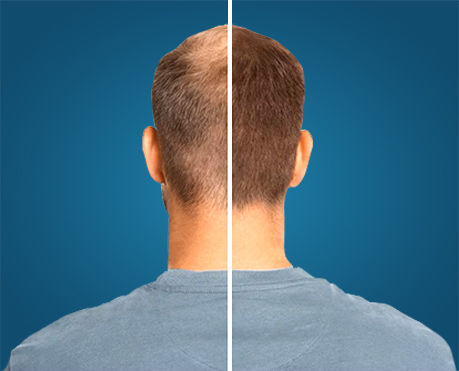
In this guide, we look at the best ways to stop hair loss immediately with help from science and experts.