
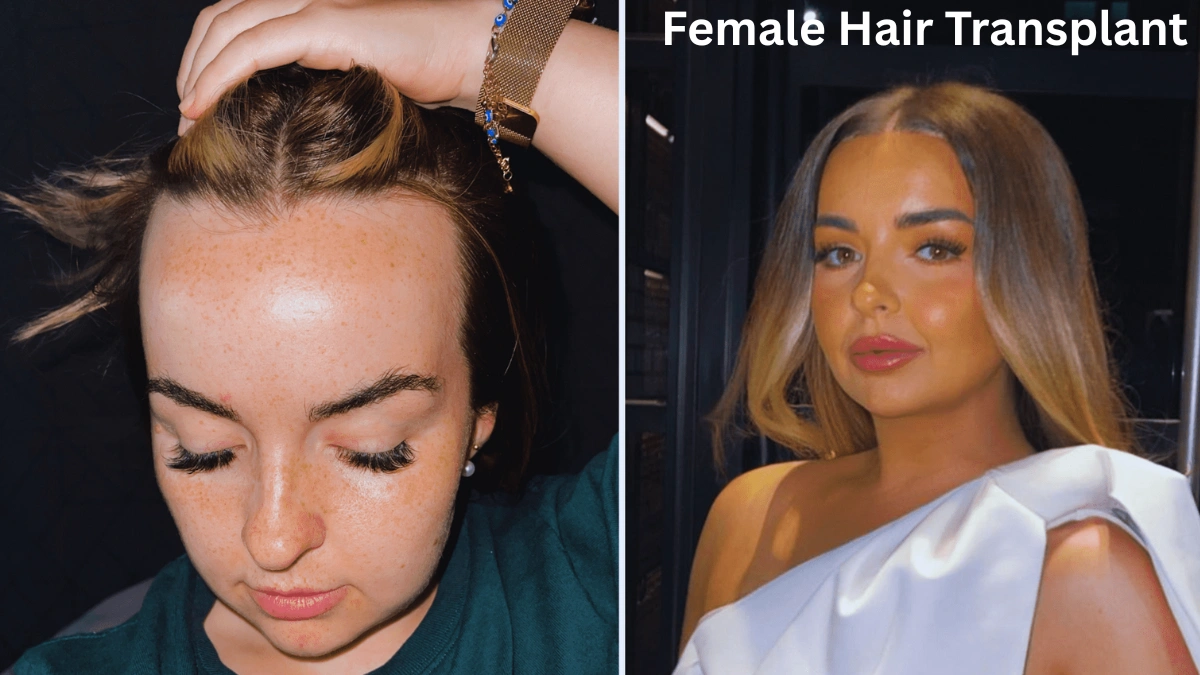
Female Hair Transplant: A Complete Guide for Women Experiencing Hair Loss
Female Hair Transplant: A Complete Guide for Women Experiencing Hair Loss
Discover the key benefits of female hair transplant for permanent, natural-looking hair restoration. Get expert, dermatologist-led treatment at Dr. Hanan Dermatology Speciality Clinic, Chennai.
Female Hair Transplant: Hair loss is not just a men’s concern. Millions of women experience thinning hair, widening part lines, receding hairlines, or bald patches due to hormonal changes, genetics, stress, or medical conditions. A female hair transplant is an advanced, dermatologist-approved solution designed specifically for women to restore hair density while maintaining a natural, feminine appearance.
Unlike male hair restoration, female hair transplant procedures require a highly customized approach, making expert evaluation and technique selection crucial for success.
Understanding Hair Loss in Women
Hair loss in women can be temporary or permanent, depending on the cause. Common reasons include:
Hormonal imbalance (PCOS, menopause, post-pregnancy)
Genetic predisposition (female pattern hair loss)
Chronic stress or illness
Thyroid disorders
Nutritional deficiencies
Traction from tight hairstyles or extensions
A proper diagnosis is essential before deciding on a hair transplant, as some types of hair loss respond better to medical treatment than surgery.
Common Female Hair Loss Patterns
Women experience hair loss differently from men. The most common patterns include:
Female Pattern Hair Loss (FPHL): Gradual thinning over the crown and part line
Diffuse Thinning: Overall reduction in hair density
Traction Alopecia: Hair loss caused by tight hairstyles
Alopecia Areata: Patchy hair loss due to autoimmune causes
Scarring Alopecia: Permanent hair loss from injury or inflammation
Each pattern requires a tailored treatment plan to achieve natural results.
What Is a Female Hair Transplant?
A female hair transplant involves relocating healthy hair follicles from a donor area (usually the back or sides of the scalp) to thinning or bald areas. The goal is to restore volume, improve density, and create a natural hairline that blends seamlessly with existing hair.
Common areas treated include:
Frontal hairline
Crown and mid-scalp
Widening part lines
Scarred areas
Eyebrows (in select cases)
Who Is an Ideal Candidate for Female Hair Transplant?
Women may be suitable candidates if they:
Have stable hair loss with visible thinning or bald areas
Possess a healthy donor area with sufficient hair density
Have realistic expectations about results
Have not responded adequately to medical treatments alone
Women with active hair shedding conditions may need medical management before considering surgery.
Hair Transplant Techniques for Women
FUE (Follicular Unit Extraction)
FUE is the most commonly recommended technique for women because it:
Leaves no linear scar
Is ideal for diffuse thinning
Allows flexible donor area selection
Provides natural-looking density
FUT (Strip Method)
FUT may be considered in select cases where a larger number of grafts are needed. However, it involves a linear scar and is less commonly preferred for women.
Donor Area Selection & Hairline Design
Successful female hair transplantation depends heavily on:
Careful donor area selection to prevent visible thinning
Precision graft extraction
Customized hairline and density planning
Matching hair direction, angle, and texture
Expert planning ensures the results look natural and feminine.
Step-by-Step Female Hair Transplant Procedure
Detailed consultation and scalp analysis
Local anesthesia for comfort
Graft extraction from donor area
Careful implantation into thinning regions
Procedure duration: typically 4–8 hours, depending on graft count
The procedure is safe, minimally invasive, and performed as a day-care treatment.
Recovery & Aftercare
Mild scabbing and redness for 7–10 days
Gentle hair washing as advised by the dermatologist
Return to work within a few days
Avoid strenuous exercise for 2–3 weeks
Following aftercare instructions is vital for optimal graft survival.
Hair Growth Timeline & Results
Temporary shedding (shock loss) may occur in the first few weeks
New hair growth begins around 3–4 months
Noticeable density improvement by 6–9 months
Final results visible in 9–12 months
Transplanted hair is generally permanent, provided underlying hair health is maintained.
Female hair transplant is considered safe when performed by experienced dermatologists. Possible mild side effects include:
Temporary swelling or redness
Shock loss
Minimal infection risk
These risks are significantly reduced in certified, medically supervised clinics.
Maintenance & Long-Term Hair Care
To protect existing hair and enhance results, doctors may recommend:
Topical treatments like Minoxidil
PRP (Platelet-Rich Plasma) therapy
Nutritional support and scalp care routines
Ongoing care helps maintain overall hair health and density.
Table of Contents
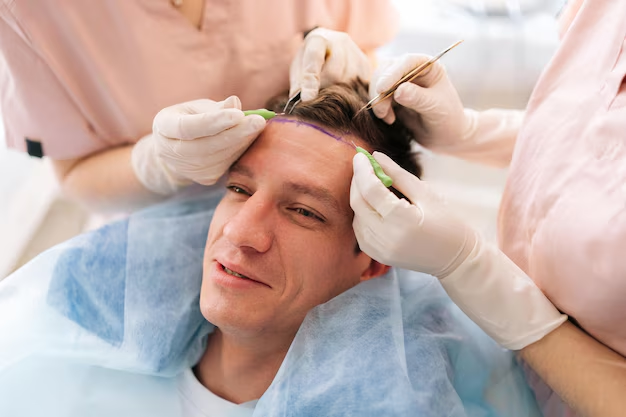
How Many Grafts Do You Need for a Successful Hair Transplant?
How Many Grafts Do You Need for a Successful Hair Transplant?
Wondering how many grafts you need for a successful hair transplant? Learn graft requirements, costs, and expert insights
How Many Grafts Do You Need for a Successful Hair Transplant: Hair loss can be emotionally challenging, especially when it starts affecting your confidence and appearance. For many, a hair transplant in Chennai offers a permanent, natural-looking solution. But one of the most common questions patients ask is: “How many grafts do I actually need for a successful hair transplant?”
The answer isn’t one-size-fits-all. It depends on your stage of baldness, hair density goals, and the technique used. At Dr. Hanan Dermatology Speciality and Trichology Clinic, we provide personalized assessments to determine the exact number of grafts required for long-term, natural results.
What Are Hair Grafts?
A hair graft is a small piece of skin containing hair follicles. Each graft can contain anywhere from 1 to 4 hair follicles. During a hair transplant, these grafts are extracted from the donor area (usually the back or sides of the scalp) and implanted into thinning or balding areas.
The number of grafts you need directly determines:
- The density of your new hair
- The coverage area (front hairline, crown, or full scalp)
- The cost of the procedure
Factors That Decide How Many Grafts You Need
Stage of Baldness (Norwood Scale)
Dermatologists use the Norwood Scale to classify male pattern baldness.
- Early stages (Norwood 2–3): May need 800–1,500 grafts.
- Moderate baldness (Norwood 4–5): Around 2,000–3,000 grafts.
- Advanced baldness (Norwood 6–7): 3,500–5,000+ grafts may be required.
Desired Hair Density
Some patients want a fuller, denser look, while others are satisfied with moderate coverage. The higher the density goal, the more grafts are needed.
Donor Area Availability
Your donor area (the back and sides of the scalp) must have enough strong, healthy follicles to supply grafts. If the donor area is limited, we plan carefully to balance density and coverage
Hair Characteristics
- Thicker hair → Fewer grafts needed for coverage
- Curlier hair → Appears denser
- Straight, fine hair → Requires more grafts for the same effect
Hair Characteristics
- FUE (Follicular Unit Extraction): Individual grafts are extracted. Best for precision and minimal scarring.
- FUT (Follicular Unit Transplantation): A strip of skin is removed and divided into grafts. Suitable for higher graft numbers in a single session.
Average Grafts Required for Different Areas
- Hairline Restoration: 800–1,200 grafts
- Frontal Zone (forehead area): 1,500–2,000 grafts
- Crown Area (vertex): 1,000–2,500 grafts
- Full Head Coverage: 3,000–5,000+ grafts
Example: A patient with moderate baldness (Norwood 4) may need around 2,500 grafts to restore the hairline and crown area with natural density.
How Many Sessions Will You Need?
Depending on your graft requirement and donor supply:
- Low grafts (1,500 or less): Usually completed in one session.
- High grafts (3,500+): May require two sessions for best results.
At Dr. Hanan Clinic, our dermatologists assess the scalp, donor density, and hair goals before planning the session count.
Does More Grafts Always Mean Better Results?
Not necessarily. While more grafts may give higher density, quality and placement matter more than quantity. Poorly placed or low-survival grafts won’t give natural results, no matter how many are implanted.
That’s why it’s essential to choose an experienced clinic with advanced technology. At Dr. Hanan Dermatology Speciality and Trichology Clinic, we use FDA-approved tools and follow strict protocols to ensure graft survival and natural outcomes.
Cost of Hair Transplant by Graft Count in Chennai
The cost of hair transplant in Chennai is usually calculated per graft:
- ₹30–₹45 per graft (depending on technique and clinic expertise).
So, a 2,000-graft transplant may cost around ₹60,000–₹90,000, while a 4,000-graft transplant could cost ₹1.2–₹1.6 lakhs.
Investing in the right number of grafts ensures not just coverage, but a natural hairline and lasting results.
Final Thoughts
The number of grafts you need for a successful hair transplant depends on baldness level, donor area, and personal goals. More grafts don’t always equal better results – skilled placement, advanced technology, and aftercare matter the most.
At Dr. Hanan Dermatology Speciality and Trichology Clinic, we take a personalized approach, ensuring every graft counts toward natural, lasting hair restoration.
Book Your Consultation Today!
For Personalised Treatment visit Dr. Hanan Clinic. Feel confident and proud with our expert care.