
How Much Time for Hair Transplant to Grow
How Much Time for Hair Transplant to Grow tips from Dr. Hanan Clinic, Chennai.
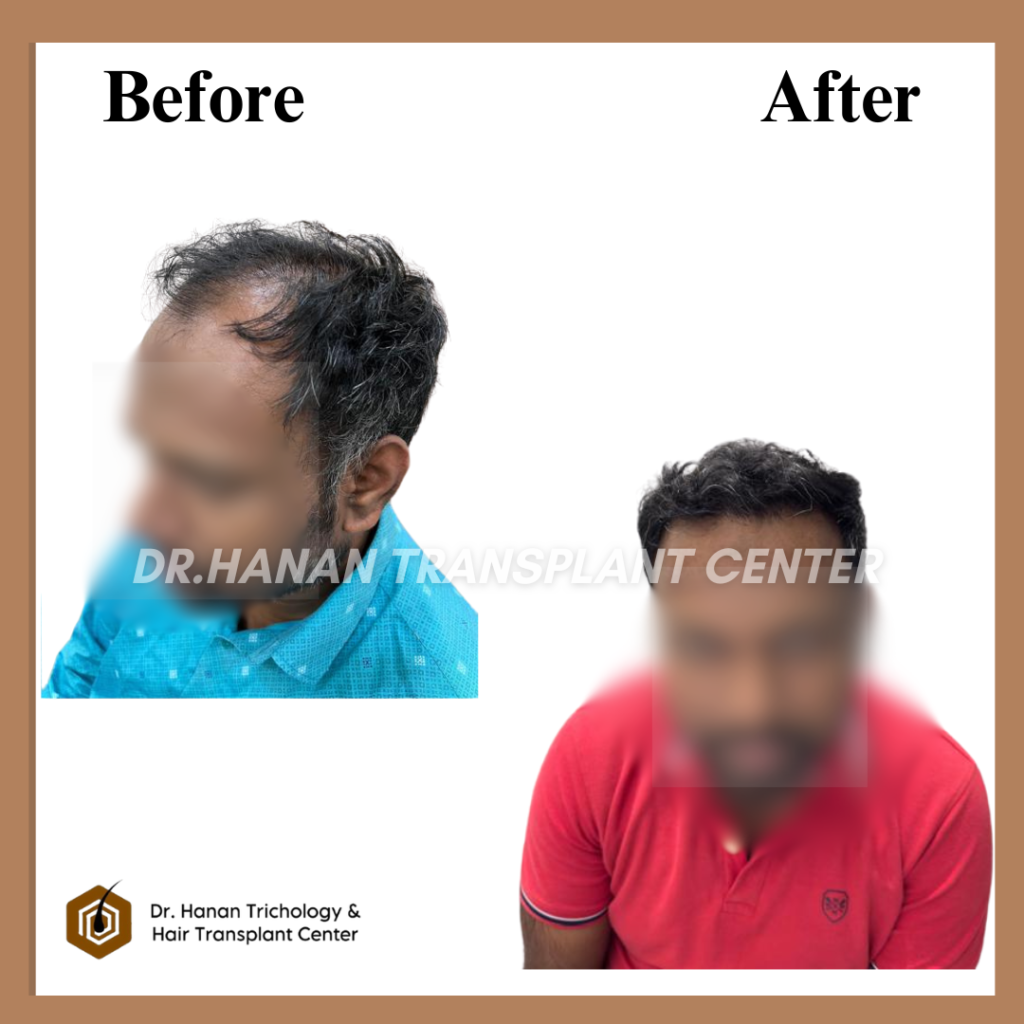
How Much Time for Hair Transplant to Grow: Hair transplant is one of the most effective and permanent solutions for hair loss. But one question every patient asks before the procedure is:
“How long does it take for a hair transplant to fully grow?”
The simple answer: Hair transplant growth takes around 12 to 18 months for full, natural results. However, the journey happens in stages, and understanding this timeline helps you stay confident and patient throughout the process.
What Happens After a Hair Transplant?
After a hair transplant procedure, your scalp goes through three main phases:
- Healing phase – the scalp recovers from the procedure
- Shedding phase (shock loss) – transplanted hair falls out temporarily
- Regrowth phase – new, permanent hair begins to grow
This cycle is completely natural and part of the success of the treatment.
Hair Transplant Growth Timeline (Month-by-Month)
0–1 Month: Healing & Shock Loss
- Scalp starts healing after the procedure
- Small scabs and redness may appear
- Transplanted hair begins to fall out (shock loss)
This is normal. Hair roots remain intact under the skin.
2–3 Months: Dormant Phase
- Hair follicles enter a resting stage
- No visible hair growth yet
- Patients may feel concerned due to slow progress
This is the waiting phase where follicles prepare for regrowth.
3–4 Months: Initial Growth Begins
- Fine, soft hair starts growing
- Hair may appear thin and uneven
This is the first visible sign of success.
5–6 Months: Visible Improvement
- Around 50–60% of hair growth is noticeable
- Hair starts becoming thicker
- Overall appearance improves
7–9 Months: Density & Thickness
- Hair becomes darker and stronger
- Bald areas get better coverage
- Styling becomes easier
9–12 Months: Near Final Results
- Hairline becomes well-defined
- Most transplanted hair has grown
- Density improves significantly
12–18 Months: Full Growth
- Final density and thickness achieved
- Crown area may take longer
- Hair behaves like natural hair
Factors That Affect Hair Transplant Growth Time
Age and Genetics
Your natural hair growth cycle plays a major role in results.
Technique Used
Advanced methods like FUE and FUT impact healing and growth speed.
Surgeon Expertise
Choosing an experienced dermatologist ensures better graft survival and natural results.
Post-Operative Care
Following instructions properly improves growth success.
Diet and Lifestyle
Healthy food, vitamins, and hydration support better hair growth.
Why Choose Dr. Hanan Dermatology Speciality Clinic in Chennai
Dr. Hanan Dermatology Speciality Clinic is a trusted name for advanced skin and hair treatments in Chennai.
About Dr. Hanan Basith
- MD (DVL), FFAM
- Graduate of Madras Medical College, Chennai
- Expertise in dermatology, dermoscopy, and aesthetics
- Certified by IADVL, AHRS, and IAFCS
Clinic Highlights
- Advanced FUE and FUT hair transplant techniques
- Personalized treatment plans
- Modern equipment and safe procedures
- High patient satisfaction rate
Location
Padur, OMR, Chennai – 603103
Phone: +91 6381048403
Hair Transplant Results: What to Expect
- Results are gradual, not instant
- Initial shedding is part of the process
- Final outcome looks natural and permanent
- Hair grows like your original hair
Patience is key to achieving the best results.
Aftercare Tips for Faster Hair Growth
- Follow your doctor’s instructions strictly
- Avoid smoking and alcohol during recovery
- Use prescribed shampoos and medications
- Eat protein-rich and vitamin-rich foods
- Attend follow-up consultations
Common Myths About Hair Transplant Growth
- Hair grows immediately after surgery
- Shedding means treatment failure
- Results are instant
- Hair transplant is very painful
These are common myths. Understanding the process helps reduce anxiety.
Who is the Right Candidate for Hair Transplant?
- People with stable hair loss
- Individuals with a healthy donor area
- Men and women with pattern baldness
- Those seeking a permanent solution
Consultation with a dermatologist is essential.
n (narrowing of blood vessels), reducing blood flow to the scalp. This deprives grafts of oxygen and nutrients, lowering their survival rate. Alcohol, on the other hand, dehydrates the body and impairs liver function, limiting nutrient absorption.
Actionable advice:
- Quit smoking at least 2 weeks before and after surgery for best results
- Avoid alcohol for the first 7–10 days post-surgery to minimize complications
- Replace alcohol with healthier alternatives like coconut water, fresh juices, or green tea
FAQs
1. How much time does a hair transplant take to grow fully?
Hair transplant results typically take 12 to 18 months for full growth and natural density.
2. When does new hair start growing after a transplant?
New hair usually starts growing around 3 to 4 months after the procedure.
3. Why does transplanted hair fall out after surgery?
This is called shock loss, a normal phase where transplanted hair sheds before new growth begins.
4. When will I see noticeable results?
You can expect visible improvement by 5 to 6 months, with about 50–60% hair growth.
5. Does hair grow evenly after a transplant?
No, early growth may be uneven. Hair gradually becomes uniform over time.
6. Does the crown area take longer to grow?
Yes, the crown area may take up to 12–18 months to achieve full density.
7. Can I speed up hair growth after a transplant?
You can support faster growth by following post-operative care, eating a healthy diet, and using prescribed medications.
8. Is hair transplant growth permanent?
Yes, transplanted hair is generally permanent and grows naturally like your existing hair.
9. When can I cut or style my transplanted hair?
You can usually start trimming or styling your hair after 5–6 months, once it becomes stronger.
10. Is hair transplant painful and does it affect growth?
The procedure is done under anesthesia, so pain is minimal, and it does not affect hair growth when done correctly.
Book Your Consultation Today!
For Personalised Treatment visit Dr. Hanan Clinic. Feel confident and proud with our expert care.